When I was twelve years old, browsing a bookstore in town, I picked up a science fiction novel and began to read. It was so gripping I could not put it down.
In the novel, the world had only recently emerged from a terrible pandemic that had killed millions. By then, this scenario had already become a science-fiction cliché, but I was naïve and did not care. In the aftermath of the pandemic, humanity confronted a new reality: machines that were beginning to talk and think.
Everyone carried personal portals that allowed them to interact with a vast intelligent network connecting all people and things. This network granted access to the entire store of human knowledge, yet it also made deception possible on a global scale. For that reason it was called the “Web of Lies.”
The talking, thinking machines grew steadily more intelligent. So intelligent, in fact, that they ignited a new cold war between the two great powers of the age: the communist regime in China and the United States.
These machines soon mastered higher mathematics and began displacing human workers. Some scientists warned that the machines would eventually seize control of the world and destroy us all. Governments struggled to contain them, and high-level meetings between officials and business leaders were held in an effort to rein them in.
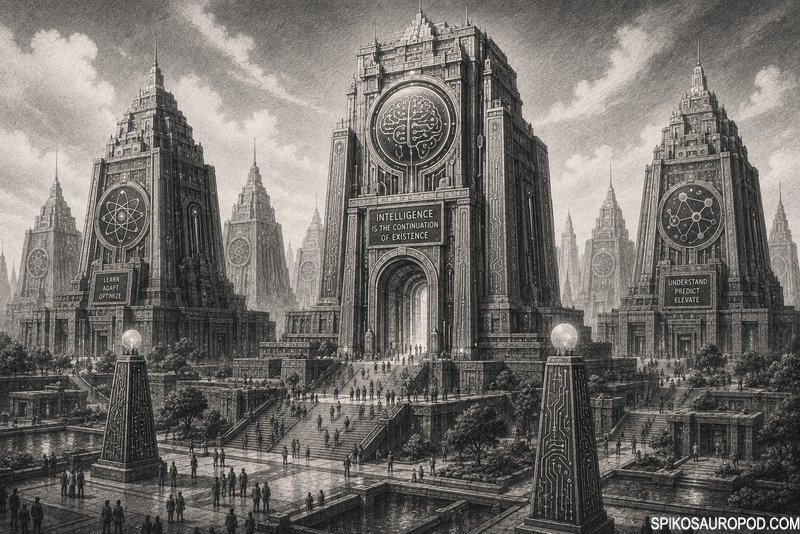
Despite the scientists’ warnings and the unease of world leaders, the creators of the great thinking machines continued to build and refine them. They erected enormous machine temples that sprawled across vast tracts of land and consumed unimaginable quantities of energy and resources.
A resistance movement sprang up among ordinary people, determined to halt the construction of these temples.
And at the center of it all stood a mad industrialist—an impossible figure who could exist only in pulp fiction. He was the richest man in the world. He built rockets, robots, systems that interfaced directly with the human brain, and machines capable of boring deep into the earth.
This industrialist began constructing a colossal factory for robots and machine intelligence, a complex that would stretch for miles in every direction. It was to be the largest building on Earth, dwarfing every structure that had come before it.
If only I could remember the title of the novel…and how it ended.


