Tag Archives: writing

The Book of Heth: Chapter Five – The Rhythms of the Road and the Hero of Lore

24 Aug

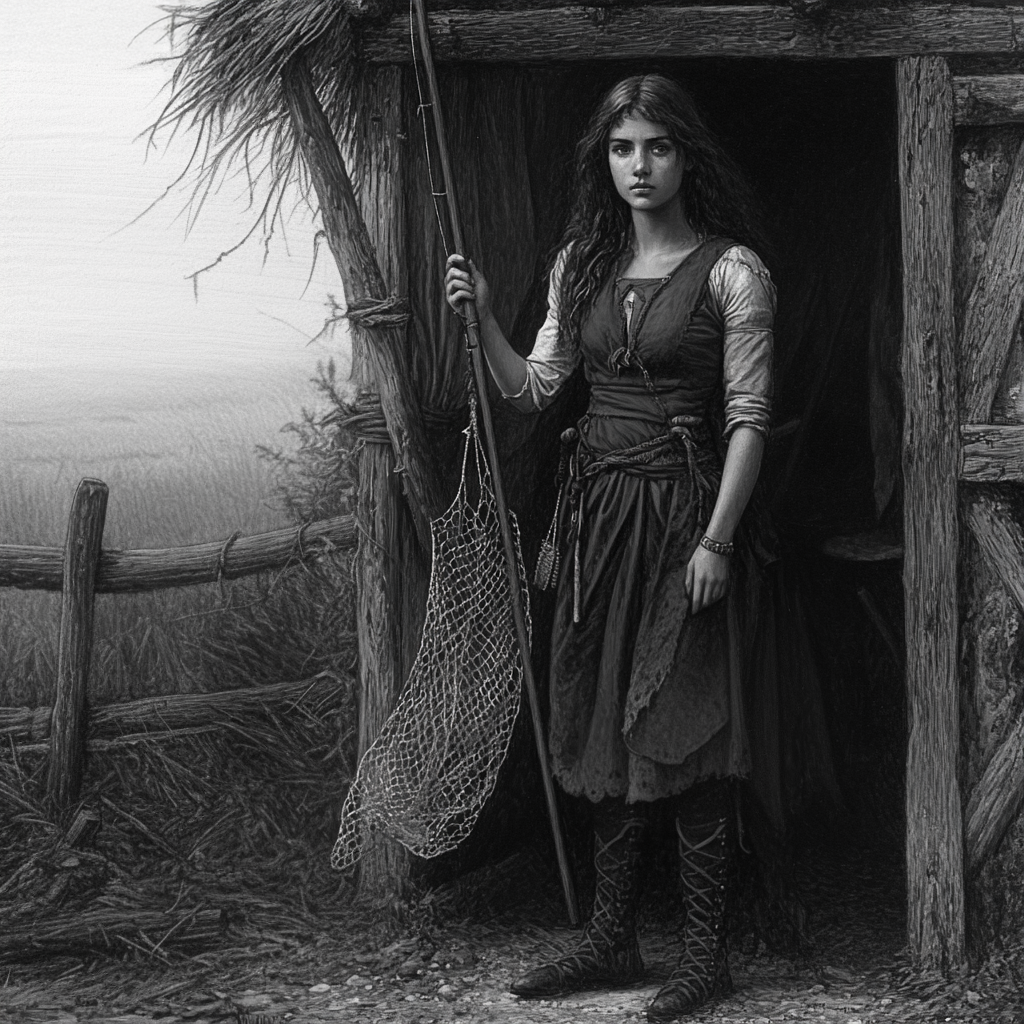
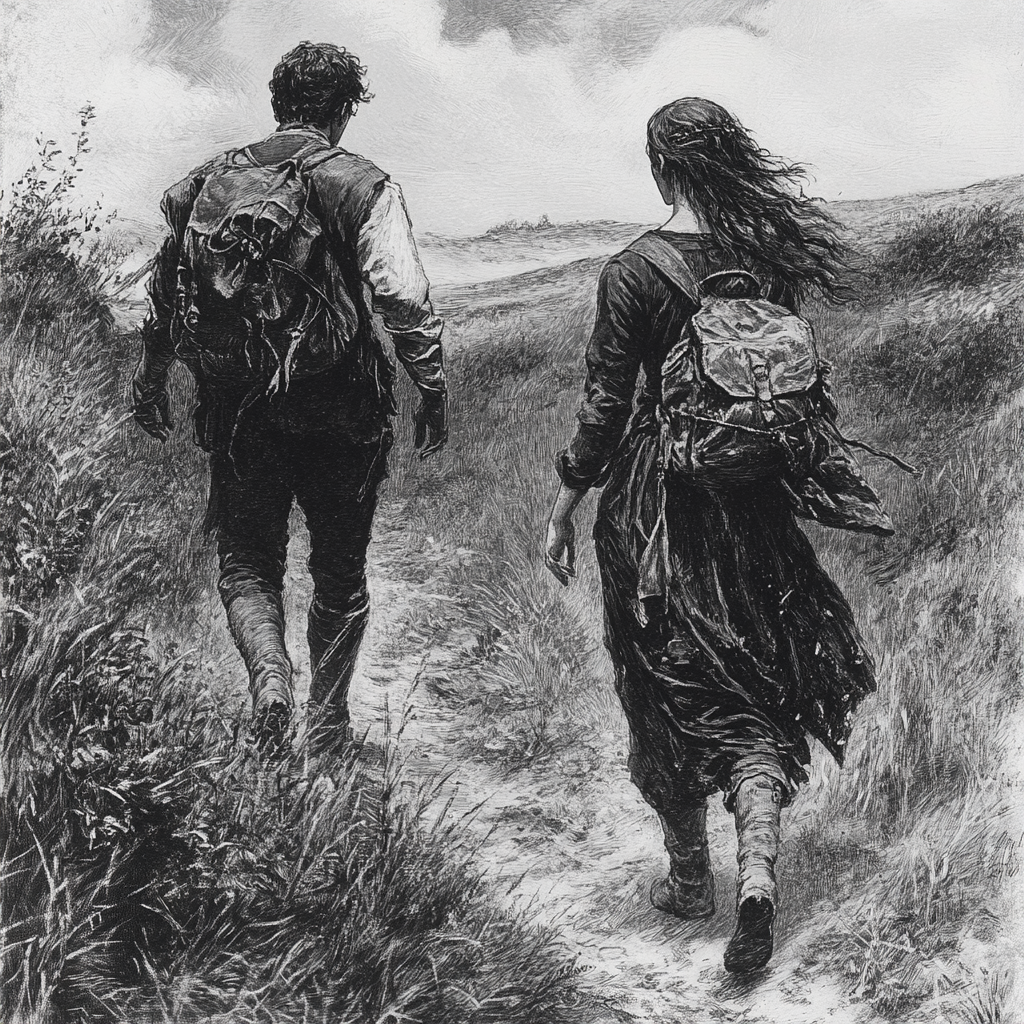
Months blurred into a rhythm as Lirael, Varyn, and I journeyed eastward through Aetheria’s uncharted lands, where prairies mingled with woods, the seasons shifting from spring’s bloom to summer’s heat under Solara’s unrelenting gaze. Lirael always took the lead, her smaller frame setting a steady pace, her flowing dress and long hair swaying like the grasses of Nuahaven. I followed, my craftsman’s eye noting the land’s measure—plains stretching toward unseen ridges, groves where strange, furred creatures darted. Varyn brought up the rear, his ruggedly handsome form, with short curly hair and a strong jaw, ever vigilant, his new leather boots—crafted by Lirael—silent despite his muscular build.

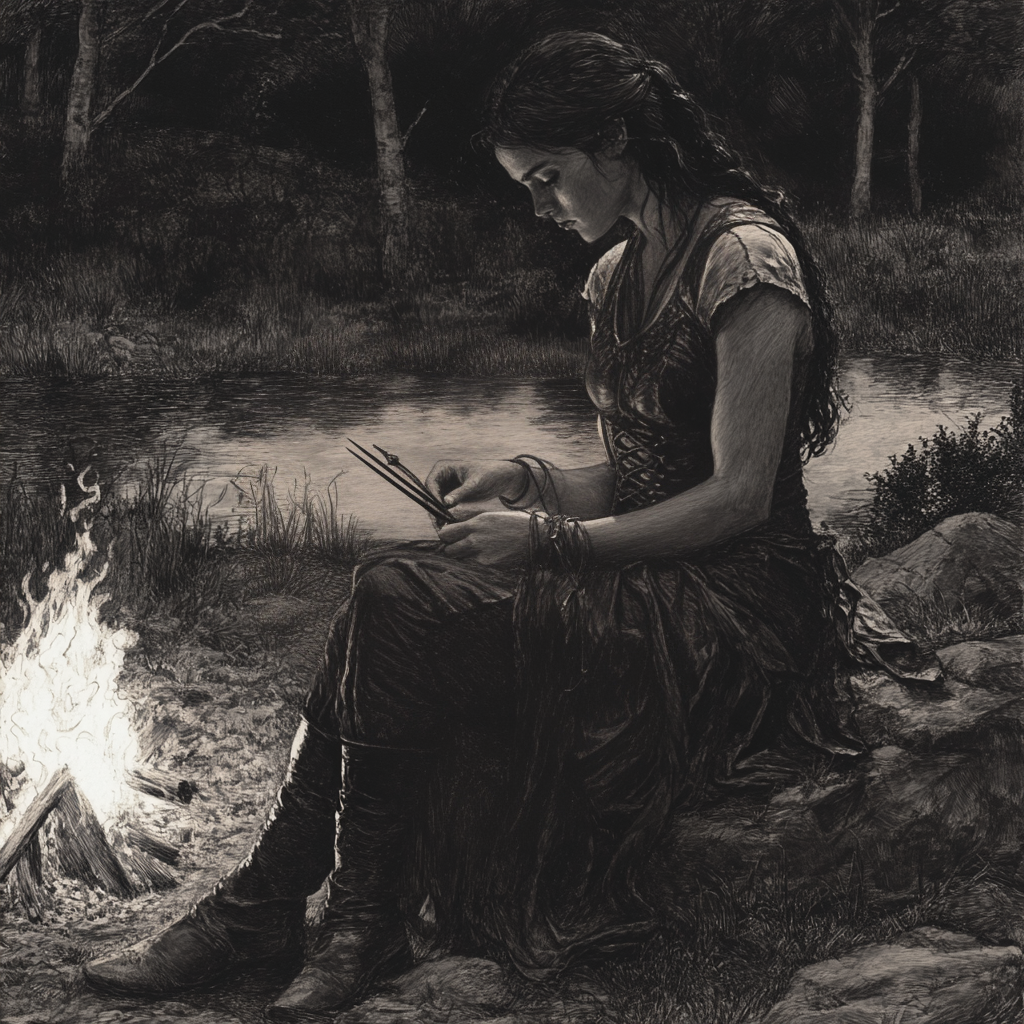
Our pattern settled like the three moons’ cycle. Varyn rose before dawn, slipping into the mist to hunt, returning with game—new beasts unlike the Velithons or Hexapods of Nuahaven’s shores. One, a swift, four-legged creature with thick silver fur and tufted ears, we named “Lunthars,” for their gleaming coats under Luneth’s light. Another, larger and shaggy, with a mane like woven thorns, we called “Korbeasts,” their reddish fur echoing Korath’s hue. Varyn slung these over his shoulder, their weight no burden to his strength. Lirael, by the campfire, mended our gear with her needle, her hands deft under Sylvara’s silver glow. Her true craft shone in tanning hides on the move, a skill honed in exile, suited for wanderers.

She used brain tanning, evaluating each Lunthar or Korbeast hide, trimming flaws with my knife on a flat stone. Fleshing followed, scraping flesh with a bone blade or metal scrap, her hands steady despite the mess. Soaking in streams we crossed, she weighted hides with rocks, stirring daily until hair slipped free. Scraping the grain and membrane left the skin pliable, demanding her forceful yet precise touch. Braining was key—she mashed the animal’s brain, or sometimes Korbeast eggs, into hot water, creating a milky emulsion. She kneaded this into the hide, softening its fibers. Wringing out excess, she twisted the hide around a pole lashed between trees, squeezing it damp. Stretching it taut over a branch frame or staked to the ground, she worked it soft as it dried. Smoking over a fire of punky wood infused durability, turning hides into supple, weather-resistant leather. From these, she crafted Varyn a wardrobe: sturdy boots, a cloak, pants, and tunic, replacing his rags to withstand summer’s heat and thorns.

As we walked, Lirael raised theological questions, her voice weaving through the prairie’s hum. “Heth, if Nua’s eternal, why create time? The Chronicle speaks of her shaping clay, but why bind us to seasons, to aging, when she could make us timeless?”

I pondered, my boots crunching grass. “Time marks growth, Lirael. The Chronicle tells of Elyria’s seasons shaping unity—trials like Tanes’s exodus forged the Covenant. Without time, we’d lack the will to choose harmony over Boana’s shadow.”

“And Nua’s justice?” she pressed, dodging a root. “Why punish discord so harshly? My fall cost me kin, yet I live. Is her mercy selective, or does she judge with a hidden scale?”

“The trinity balances justice and mercy,” I said, recalling elders’ words. “Discord breaks the triangle’s strength—three genders hold where two falter. Nua’s mercy lets us rise, as you did, but her justice guards harmony.”

Varyn, trailing behind, showed little interest in my answers, his wild eyes scanning for Lunthars or Korbeasts. Yet toward Lirael, he was reverent, carrying her pack without prompt, nodding at her words. I saw then: to sway Varyn, I must convince Lirael, her insight his guide. She persuaded him to wear her creations, saying, “Varyn, these boots shield against thorns; the cloak guards against chill. Nua provides through craft—honor it.” He relented, his new leathers fitting like a second skin, his primal grace enhanced.

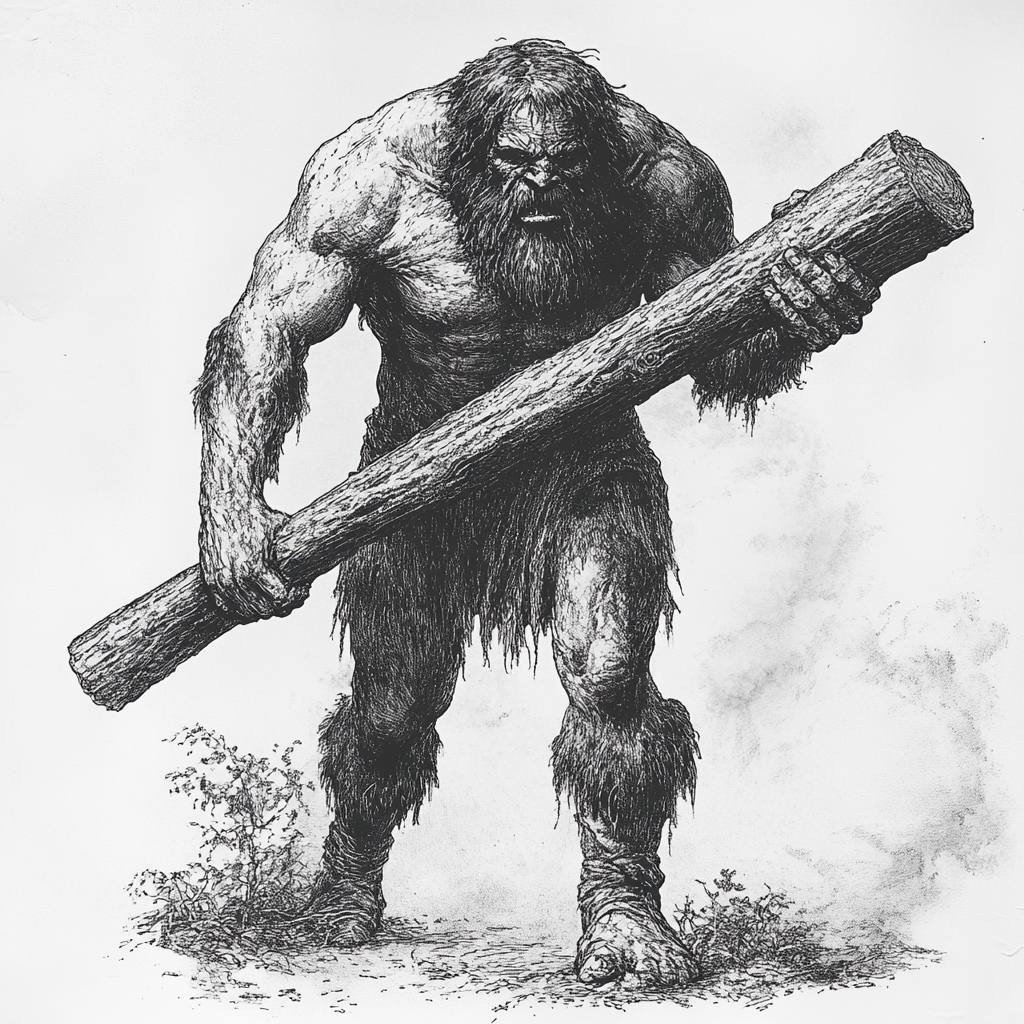
We wondered how Varyn felled such large game—Korbeasts, heavy as young Gloomtreads—without visible weapons. “Don’t jinx it,” he’d grunt, knife in hand for skinning, guarding his secret. One summer eve, a Gloomtread ambushed us in a wooded glade, its roar shaking the trees. We scattered, but Varyn whirled, a long-stringed sling materializing from his belt. A whir and snap rang out; a stone struck the giant’s head with a crack, felling it instantly.

Lirael gasped, eyes wide. “Someday, they’ll write of the young man who brought down a giant with a sling, Varyn. A feat to echo through Aetheria’s tales.”

Varyn shrugged, stowing the sling, but I saw pride in his jaw.

As summer waned, we reached thick woods, their canopy dense as the Titan Spires’ caves. Far beyond, over the treetops, a giant wall loomed—hundreds of feet tall, stretching endlessly, its smooth stone seeming man-made, a marvel rivaling the Chronicle’s ancient wonders. We camped, staring at its silhouette under Korath’s crimson glow, our trio bound by Nua’s unseen purpose.
The Book of Heth: Chapter Four – The Shadows of the Woods and the Wild Companion

12 Aug

Dawn broke over the prairie, Solara’s light filtering through the mist like a veil lifting from the land. Lirael and I broke camp swiftly, her hands deft as she rolled our cloaks, mending a loose thread with a quick stitch. The patch of woods ahead loomed darker than the open grasses we’d crossed, its canopy thick with broad-leafed branches that whispered secrets in the breeze. We pondered our path, the narrow trail vanishing into the shadows.

“Should we skirt around?” I mused, eyeing the dense growth. “The prairie curves north; we could circle back to the trail beyond.”

Lirael shook her head, her long hair swaying. “It would add days, Heth. And who carved this path? Trappers, perhaps, seeking hexapod pelts?”

I nodded, squinting at the trail’s worn earth. “Likely. But I hope it’s not Gloomtreads—or some unknown beast lurking in Aetheria’s depths. Finding east is simple enough—every young Nuahavender learns the shadows point north at noon under Solara’s zenith. This trail holds true so far, but what if we lose it? I’ve heard trappers speak of following animal trails, faint as whispers, or tracing rivers that wind like veins. Without a trail, we’d need such knowledge. I wish we’d a trapper with us, one versed in the wild’s signs.”

Lirael glanced back. “We’ll manage, Heth. Nua guides us.”

Still, going around felt like retreat. “Nua bids east; we’ll go through,” I decided.

She agreed, and we plunged in, the woods closing around us like a living thing. The air grew cooler, dappled light playing on the ground where roots twisted like veins. Single file, Lirael led, her smaller frame navigating the path with ease. But soon, a sense of being watched prickled my neck. Rustling came from above, branches creaking as if something heavy shifted. Then to the left, a snap of twigs. We froze, hearts pounding.

“Hide,” I whispered, pulling her behind a fallen log. We waited, breath held, as the sounds faded. “What was that? A hexapod, too large for these branches?”

Lirael peered out, her eyes scanning the canopy. “No hexapod moves so slyly. Could it be… Boana’s shadow, like in the Chronicle? The Boa Worms twisted Elyria’s heart—perhaps they linger here.”

I shivered, recalling Galoth’s tales of worms born from the dead. “Boana’s unseen, but her influence creeps. Maybe a beast, warped by opposition?”

We pressed on, but the stalking grew bolder. To the right, leaves shuddered; then overhead, a shadow flitted through the canopy. A nut fell, striking my shoulder, making me jump. “Just the wind?” I muttered, unconvinced. Lirael pointed to a silhouette in the branches—a head, perhaps, with jagged edges—but it vanished before we could be sure. “Did you see that?” she whispered.

“I… maybe. A trick of the light?” My voice lacked conviction.

We ducked into thick bushes at the next rustle, thorns snagging Lirael’s dress. A branch snapped above, showering us with leaves. “It’s tracking us,” I hissed. “Not a Gloomtread—their steps would shake the earth. Something lighter, cunning. Like Tanes’s tales of spirits in the wilds?”

Lirael’s eyes widened. “The Chronicle speaks of shadows born from discord. Could it be a Discordant, feral and twisted?”

We crept forward, the trail leading to a small stream, its waters gurgling like whispered secrets. As we forded it, cold biting our ankles, a ripple broke the surface downstream—something emerging, sleek and dark, before sinking back. “Did you see that?” I gasped.

Lirael nodded, clutching her cloak. “Something lives in these waters. Not a Velithon—too swift. Another of Boana’s tricks?”

We scrambled up the bank, hearts racing, and hid behind a steep earthen rise when rustling resumed to the right. Pebbles trickled down, as if dislodged above. “It’s circling,” I whispered. “Boana’s worms, or worse? The Chronicle warns of unseen foes.”

Lirael’s voice trembled. “We should turn back, Heth. This feels like opposition itself.”

I shook my head. “No. If we retreat now, we’ll falter at every shadow. Nua’s path is forward; we can’t build the habit of turning around once chosen.”

She sighed but nodded, and we continued as night fell, the woods darkening like a shroud under Luneth’s pale glow. A flicker of fire ahead drew us—a small clearing where a young syren sat close to the flames, his form wild and rugged. He was about our age, with short curly hair matted like tangled vines, clad in ragged leathers that barely covered his muscular frame, his feet bare and calloused. Ruggedly handsome, his eyes wild but his face clean with a strong, handsome jaw, he exuded a primal vitality, too masculine for a syren yet striking in his presence.

He glanced up as we approached, his voice gruff but welcoming. “Strangers in the woods? Well met. I’m Varyn. Come, share the fire—I’ve Velithon roasting, fresh from the snare.”

We hesitated, then joined him, the meat’s aroma overpowering caution. “Heth,” I said, “and Lirael. We’re eastward bound on Nua’s call—a dream commanding me to seek the blue, sharing our faith with giants’ kin, measuring Aetheria’s span.”

Varyn nodded, turning the spit. “Bold venture. Me? I’m out here fending alone. Civilization chokes me—Nuahaven’s crowds, the endless rules of the Covenant. I tried it as a youth, apprenticed to craftsmen, but the walls closed in. Traveled with trappers once, learning snares and tracks, but even they bickered over shares. Realized I was happier wild, hunting solo, sleeping under the moons. No one to answer to, no discord in solitude. The woods provide—better than any village feast.”

Lirael leaned forward. “But the dangers? Gloomtreads, beasts?”

Varyn grinned, his teeth flashing in the firelight. “Dangers build strength. That rustling stalking you? Trappers’ secret—a Discordant gone feral, wild as a hexapod but cunning. Guards these woods; even Gloomtreads fear it, keeping clear. Favorite spot for us loners.”

“And Gloomtreads?” I asked. “You’ve faced them?”

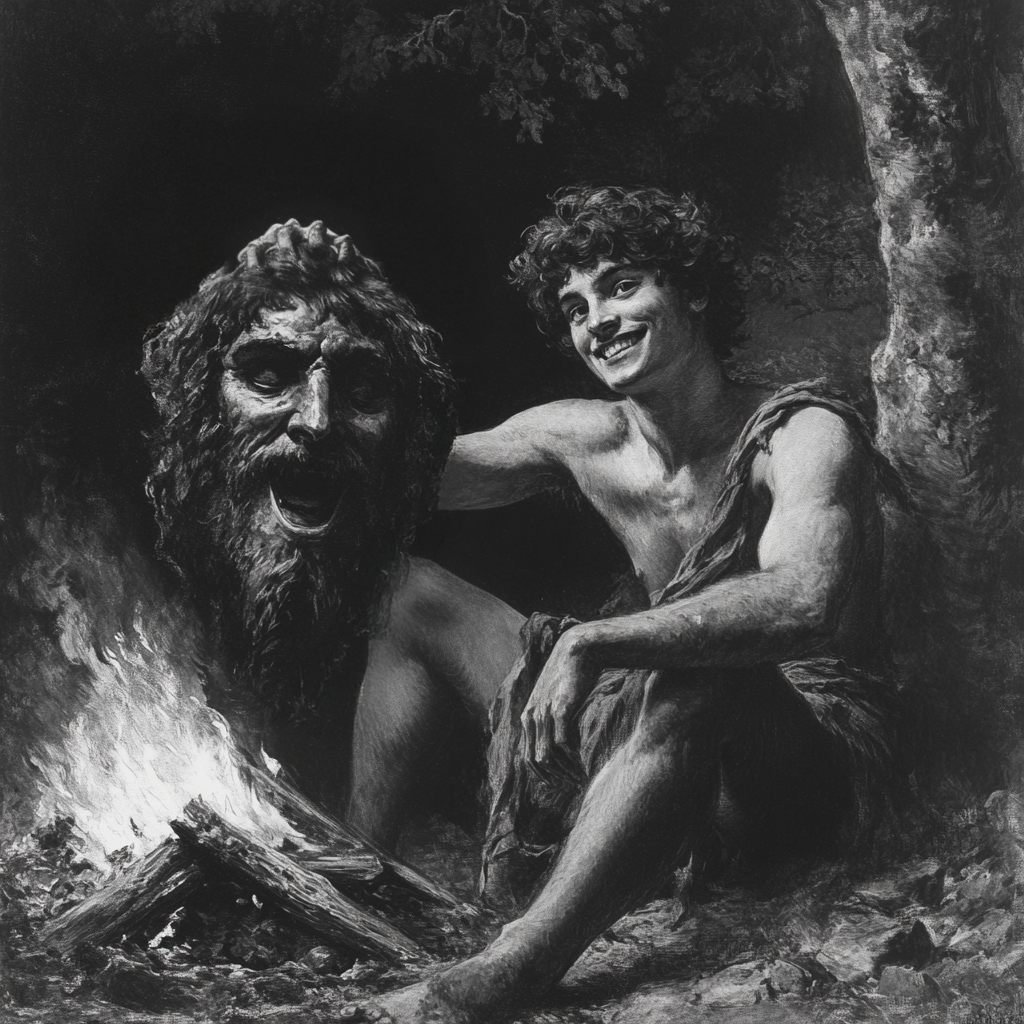
He laughed, pulling a sack from the shadows. “One trailed me yesterday. Slipped into bushes, climbed a tree, waited till it passed below. Knife to the back of the neck—clean kill.” Seeing our skepticism, he hoisted the sack and dumped out a Gloomtread’s severed head, its brutish features frozen in surprise, holding it up with one hand like a trophy.

I recoiled, stomach turning at the grisly sight. Lirael, though pale, whispered to me, “Another provision, Heth.” I understood—his wild strength could guard us eastward. He was the trapper I had carelessly wished for, versed in the wild’s ways, but somehow better—a syren whose ferocity matched the woods themselves.

We raised the question as the fire died. “Varyn, join us east? Your skills would aid Nua’s call.”

He accepted swiftly, eyes alight. “East? Dared dream it, but alone it’s folly. These woods I know, but beyond? With company, aye. Let’s see the blue together.”

We camped by his fire, the woods’ whispers fading, our trio formed under the three moons. As I lay on my pallet, staring at the stars peeking through the canopy, a profound thought stirred within me. Here we were—a male, a female, and a syren—bound not for procreation’s sacred sequence, but for some greater purpose veiled in Nua’s command. Lirael with her mending wisdom, Varyn with his feral strength, and I, the dreamer called eastward. No union of flesh, yet a trinity of spirit, mirroring the three moons above: Luneth’s serenity in our questions, Sylvara’s grace in our companionship, Korath’s resolve in our forward march.

It echoed our discussions—the triangle’s strength, three points unyielding where two would falter. As in the elders’ theory, our trio braced against the wilds, each upholding the others. And the threes abounded: Hexapods in triads, Skydrakes circling in threes, even the Gloomtreads’ fall from slaying their syrens, breaking the sacred three. Nua’s grand design wove through it all, her infinite insight turning chance meetings into purpose. What greater harmony could there be? We were not lovers, but kin in quest, a reflection of the Shaper’s eternal balance. Sleep claimed me then, wonder lingering like the moons’ light.

The Book of Heth: Chapter Three – The Paths of Question and Companionship

30 Jul

As Lirael and I pressed eastward through Aetheria’s vast prairies, Solara’s spring light bathed the rolling grasses, where Hexapods darted in triads, their iridescent hides shimmering like the streams of Nuahaven. Clumps of broad-leafed trees dotted the horizon, their branches swaying gently under the breeze, a stark contrast to the open expanses we trod. By midday, a shadow loomed in the distance—a Titanclaw, its massive form lumbering across the plain, scales glinting like molten iron. It paid us no mind, its gaze fixed on some unseen prey, and I recalled the wisdom of our shore kin in Nuahaven.

The coastal Silvrens, after the Gloomtread wars, had few troubles with those brutish giants. They learned a simple trick: clear the land around their homes, plant fields of grain, and let the open spaces deter the Gloomtreads. Those dim-witted titans, fearing the Titanclaws that roamed such plains, shunned the cleared lands. Our people, blessed with some scent or essence the great lizards found repellent, suffered only minor crop damage—a small price for safety. The Titanclaws, like silent guardians, did the rest, their hunger fixed on giants, not us.

The path we followed was narrow, barely wide enough for one, forcing me to lead with Lirael trailing behind. Her steps, lighter than mine, echoed softly, but as Solara climbed, I heard her breath grow labored. Glancing back, I saw her smaller frame struggling to match my pace, her long hair catching on stray branches, her dress swaying with each determined step. A pang of guilt struck me—I had set a man’s stride, unmindful of her. “Lirael,” I called, halting, “take the lead. Your pace suits the path better.”

She nodded, stepping ahead with a grace that belied her effort, her form outlined against the prairie’s green. As she walked before me, I noted her attractiveness—her flowing hair, her gentle movements, the quiet strength in her frame. Yet no spark of romance stirred in me, and I deemed it a blessing. After her fall, the discord that cost her kin and home, I guessed she’d shun men’s advances, her heart scarred by Kael’s abandonment. Instead, I saw her as a sister, perhaps even a mother or elder, wise beyond her years. It marveled me, this deep draw to her so soon—not as a lover, but as a kindred spirit, a perfect friend. The thought struck deeper: in Nuahaven, my life of crafting had left me friendless, a void I’d never named until now. Work had been my solace, but Lirael’s presence awakened a longing for companionship, pure and unromantic.

I realized then another strength Nua had granted me: leadership, not in prophecy or survival, but in guiding others with care. Adjusting for Lirael’s pace was a small act, yet it revealed my ability to lead with compassion, a skill I’d need on this journey.

Lirael, now in front, grew talkative, her voice rising like a Skydrake’s song over the prairie’s hum. “Heth,” she began, “you’re bound by Nua’s command, but what do we truly know of her? Where did the Eternal Shaper come from? Was she an outcast of greater gods, wandering the void before crafting Aetheria?”

I blinked, her question sharp as a geyser’s burst. “The Chronicle says Nua shaped our world from clay, her will eternal. Beyond that, the elders teach she is the source, unbound by origin.”

“But why?” Lirael pressed, dodging a root. “Did she have a syren and male, their joining birthing the world? The trinity’s sacred, but why three genders? Two would be simpler—less chance for discord, like my fall.”

I pondered, recalling words I’d overheard from elders in Nuahaven’s groves, men who studied the shapes of things—craftsmen and thinkers pondering Nua’s design through forms etched in stone and wood. “I’ve heard a theory, Lirael, from those who gaze upon the world’s bones. They speak of the triangle’s strength. Two points make a line, straight and true, but fragile—bend it, and it snaps like a dry branch underfoot. No balance, no hold against the winds. But three points form a triangle, steadfast and unyielding, like the Titan Spires’ peaks rising against storms. Each side braces the others; remove one, and it crumbles to nothing. So with genders—two alone would waver, unstable as a reed in quicksand, birthing weakness or endless strife. But three weave a form that endures, each gender upholding the rest, mirroring Nua’s moons in the heavens. The elders say it’s why creation stands firm; without the syren’s harmony binding male and female, life would falter like a poorly mended net.”

She glanced back, eyes probing. “And evil—Boana, the Boa Worms. No one’s seen them, Heth. Are they tales to scare us? Why does Nua permit evil at all? If she’s all-powerful, why not end it?”

Her words stirred unease. “Boana’s shadow is in discord, in division,” I ventured. “The Chronicle tells of worms born from the dead, twisting our ancestors’ world. Perhaps they’re not seen but felt—in choices, like your trial. Nua allows it to teach us, to choose harmony.”

Lirael’s pace slowed. “And why the exodus? Nua parted seas, sent eclipses, storms. Why not keep shielding us in the valley? Why send us to Aetheria, only to face Gloomtreads? Does she tire of miracles? And what of her purpose? Is she alone, or part of a greater dance we cannot see?”

I struggled, my craftsman’s mind no match for her probing. “Perhaps Nua tests faith, not strength. The valley’s miracles preserved us, but Aetheria’s trials forged unity, as Tanes taught. Her purpose… maybe it’s like the Titan Spires’ caves—vast, ordered, yet mysterious.”

She nodded, unconvinced but thoughtful. “Questions linger, Heth. If Boana rivals Nua, is there a balance beyond them? Why is discord so grave? My fall cost me everything, yet I live. Is Nua’s wrath or mercy truer? And what of the giants we seek—will they question as I do?”

Her queries echoed those whispered in Nuahaven’s councils, doubts I’d heard but never voiced. Was it irreverent to question thus? Yet, as we walked, I saw wisdom in her words. If I were to meet the giants, as Nua commanded, they might ask the same—why three, why evil, why exile? Her questions honed my faith, and I marveled at her knowledge. Lirael had near-memorized the Chronicle, her exile deepening her study. Each question taught me details I’d overlooked—Galoth’s wanderings, Tanes’s visions, the Covenant’s nuances. She was no mere outcast; her mind was a forge, shaping insight from pain.

As Solara dipped, a patch of woods loomed ahead, dense and shadowed, where Gloomtreads or worse might lurk. “Too dangerous to press on,” I said. “We camp here.”

Lirael agreed, swiftly gathering dry twigs from the prairie’s edge. With deft hands, she struck flint to spark a fire, its glow rivaling Korath’s hue. I watched, awed, as she mended a tear in my cloak, her needle weaving hide with practiced ease. “You’re indispensable, Lirael,” I said. “Fixing, mending—skills we’ll need in the wilds.”

She smiled, firelight dancing on her hair. “Exile teaches more than endurance, Heth. We’ll need every craft to reach the blue.”

We settled by the fire, the prairie’s whispers our only company, her questions lingering like stars under the three moons. The path eastward beckoned, and with Lirael’s wisdom at my side, I felt Nua’s purpose sharpening.

The Book of Heth: Chapter Two – The Path of Provisions

29 Jul

With Rylor’s pack slung over my shoulder, I pressed eastward under Solara’s rising light, the spring air crisp with the scent of blooming tart-fruits and the distant rumble of geysers in the ridges. The plains stretched before me, dotted with Hexapods grazing in triads, their iridescent hides catching the morning glow. My steps felt lighter now, the crucible of yesterday’s haste behind me, but Nua’s command gnawed at my thoughts like a small hexapod on a vine.

“Take only the clothes on your back,” the Shaper had said. Yet here I was, provisioned by a kindly trapper. Was this defiance? I pondered as I walked, the path winding past scattered farmsteads where women tended orchards in flowing skirts, their long hair tied back against the breeze. In my haste, I had debated dressing, bending the words for practicality. Now, with Rylor’s aid, the folly of literal obedience struck me fully. To trek to Aetheria’s eastern shores without food, rest, or help? I would have perished in days, a bleached skeleton amid the quicksand pits, never reaching the blue. Nua’s will was harmony, not self-destruction. The beasts of this land—the Velithons mating in sacred sequence, the Skydrakes circling in threes—accepted the land’s gifts without question. So too must I. I resolved then: aid offered in kindness would be accepted, for the journey’s spirit demanded survival, not starvation.

By midday, the settlements thinned, giving way to wilder expanses where Spikecrests roamed the fringes, their spines casting long shadows. Fatigue crept in, my legs aching from the endless march, but the resolve buoyed me. As Solara dipped toward the horizon, painting the sky in hues of Korath’s crimson, I spotted a lone hut nestled against a cluster of broad-leafed trees, smoke rising lazily from its chimney. It stood isolated, far from the clusters of Nuahaven’s kin, ringed by mended fences and a garden of hardy roots.

A young woman emerged as I approached, her form smaller and graceful, clad in a simple dress of woven hide, her long hair cascading like the streams from the Titan Spires. She watched me with wary eyes, a mending needle in hand, repairing a torn net by the door.

“Well met, stranger,” she called, her voice steady but laced with loneliness. “You’re far from the valley paths. What brings you this way, alone and laden?”

I halted, catching my breath. “Heth of Nuahaven,” I replied. “Heading east on… a journey. And you? This hut seems solitary for one so young.”

She smiled faintly, setting aside her work. “Solitary suits me, Heth. I’m Lirael. Come, you look weary from the road. Spring’s warmth deceives—nights chill quickly out here. Share my fire; I’ve stew simmering.”

Her offer warmed me more than the fading light. Remembering my resolve, I nodded. “Thank you, Lirael. A moment’s rest would be welcome.”

We sat by her hearth, the stew rich with roots and hexapod meat, flavors sharpened by herbs from her garden. As we ate, she drew me out with gentle questions. “Nuahaven’s news reaches us slowly here. The Covenant holds strong? Families thriving under the trinity?”

“Aye,” I said, savoring the meal. “Births blessed, unions sacred. But tell me, Lirael—why dwell so far? The wilds are harsh for a woman alone.”

Her eyes clouded, spoon pausing. She studied me a moment, gauging my reaction, her gaze searching for judgment or pity. Seeing neither, she began slowly. “It’s a long tale, Heth. Not one I share lightly. But you seem kind—perhaps from the valley’s heart, where mercy is taught. It began with love, as many falls do.”

I nodded, encouraging her. “Love under Nua should lift, not burden.”

She sighed, setting her bowl aside. “I was young, like you now, living in Nuahaven’s folds. There was a man—a male named Kael, strong and kind, with hands that built like yours. We met in the orchards, sharing glances under Solara’s gaze. But unions demand the trinity—syren to bind, female to nurture, male to complete. We sought a syren, Heth, we truly did. The village had few unpaired; most were in bonds, their harmonies set. One syren, Eland, seemed promising—gentle, with a voice that calmed like a stream. But he was promised elsewhere, his kin arranging a match for land’s sake.”

Lirael paused, her fingers tracing the net’s weave, watching my face for scorn. “Kael and I waited, seasons turning. Spring bloomed, tart-fruits ripened, but no syren came free. Whispers grew—’They tarry too long,’ folk said. We dreamed of a family, of young circling in threes like Skydrakes. But impatience crept in, Boana’s shadow veiled as desire. One night, under Luneth’s pale light, we… yielded. No syren preceded; discord claimed us. A child came, but twisted—brutish, dim, a Discordant. The village shunned me, Heth. ‘Opposition’s mark,’ they called it. Kael fled east, ashamed, leaving me to face the elders alone.”

Her voice trembled, but she pressed on, eyes meeting mine. “The road to exile was winding. First, whispers in the markets, women turning away their long hair swaying like judgment. Then, outright scorn—children taunted, men like the elders declaring me unfit for harmony. I bore it awhile, mending what I could, but the weight crushed. One dawn, I packed and left, seeking solitude here where quicksand and geysers keep company scarce. Self-reliance became my creed—fixing nets, mending hides, repairing what breaks. Good at it, too. Turns out opposition teaches endurance.”

I listened, heart heavy. “Nua teaches mercy, Lirael. Your fall echoes Elyria’s old rifts, but redemption lies in faith.”

She leaned forward, eyes thoughtful. “Ah, but think on it, Heth. Elyria fell to division—tribes warring, customs fracturing like our people’s drift before the Gloomtreads. My fall was small, a single discord, yet it mirrored the great opposition. Boana whispers in impatience, turning love to ruin. What if Nua allows such stumbles to teach? My exile forged strength; perhaps Elyria’s wars birthed the Covenant. We rise from shadows, wiser under the moons.”

Her words stirred me, questions blooming like spring vines. Nua’s ways were profound, her lessons layered. “You’ve insight born of trial,” I said. “The Shaper speaks through all. And your tale… it resonates, Lirael. I’ve known my own shadows in love, though not as deep as yours.”

She tilted her head, curiosity softening her features. “Shadows in love? You, young and unburdened? Tell me, Heth—perhaps sharing lightens both our loads.”

I sighed, the fire’s crackle filling the pause. “Not a fall like yours, but a void. In Nuahaven, as I pursued my craft—shaping wood into homes, mending what the wilds broke—offers came. Women, graceful and kind, their long hair flowing like streams, approached with syrens in tow, proposing unions under the Covenant. First was Mira, a female from the orchards, her syren partner Seren a gentle soul with a voice like wind through the Spires. They saw my steady hands, thought me a fine addition. But it felt… wrong. No spark, no harmony stirring in my heart. I turned them away politely, focusing on my work instead.”

Lirael nodded, urging me on. “And others?”

“Aye,” I continued, memories surfacing like bubbles from a hot spring. “Then came Elara, smaller and nurturing, her eyes bright as Solara’s dawn. She and her syren, Vaelis, had waited seasons for a male. Vaelis was strong, more masculine in build, with a laugh that echoed the geysers. They courted me during a spring feast, speaking of families circling in threes. But again, it didn’t feel right—the bond lacked depth, like a mended net fraying at the edges. I buried myself in crafting, building halls that stood firm while my heart wandered empty. The townsfolk whispered, Lirael—’Heth delays too long,’ they’d say. ‘A man of his age, unwed? Opposition lurks in solitude.’ Elders questioned me at councils, pressing for unions to strengthen Nuahaven.”

She leaned back, thoughtful. “And did the lack drive you?”

“It did,” I admitted. “Without love’s pull, work became my anchor. I honed my skills, repairing what others broke, shaping groves into shelters against the chill. But the questions grew—friends jesting, women glancing away. It wore on me, that void, making me question Nua’s plan. After such trials, understanding your difficulties isn’t hard, Lirael. Love’s path is fraught; one misstep, and shadows claim us.”

We talked long into the evening, sharing tales of Nuahaven’s feasts and her solitary crafts. As moons rose, she said, “Heth, if I’m to live alone in wilderness, why not move with purpose? Let me join you eastward. I’m handy—good at fixing and mending things. Nets for fishing, cloaks from hides. You’d not regret it.”

I shook my head. “The command was mine alone, Lirael. Danger awaits; I can’t burden you.”

She smiled shrewdly. “You’ve accepted aid—Rylor’s pack, my stew. Provisions, yes? A pack animal would be provision too—carrying loads, no questions asked.”

“True,” I conceded.

“Then why not a person more useful? I mend what breaks, forage what sustains. No burden, but a boon. Nua’s harmony thrives in company.”

Her logic pierced my doubt. “Very well, Lirael. If you insist, we’ll go together.”

Come dawn, spring’s dew glistening on the grasses, we departed eastward, her small pack slung beside mine, the hut left behind. The path called, and with a companion at my side, the journey felt less daunting under Solara’s watchful eye.

The Book of Tanes: Chapter Four – The Division of Ways and the Return of Shadows

26 Jul

In the burgeoning years upon the unnamed continent, where the streams flowed clear and the forests of Nuahaven flourished under the watchful gaze of Solara and the three moons—Luneth, Sylvara, and Korath—the Silvrens prospered. A new generation matured, their numbers swelling through unions faithful to Nua’s sacred trinity: syren, female, male in harmonious sequence. Children played among the tart-fruit orchards, their laughter mingling with the songs of Skydrakes soaring above the Titan Spires. Yet, as the Silvrens spread across the land, a troubling drift emerged, one not of distance alone but of heart and custom, stirring the prophet Tanes’s concern.

Tanes, her vision sharp as the Crest of Dawn, observed the Silvrens fragmenting into enclaves, each adopting distinct ways of life. Some, drawn to the ancient caves of the Titan Spires, carved homes within the geometric hollows, their lives shaped by stone and shadow. Others turned to the Azure Veil’s shores, becoming sea folk who wove nets and fished for creatures unlike the Glimmerfin, their days ruled by the tides of Sylvara. A third group ventured into the dense forests, scaling ridges to live as mountain folk, their hands calloused from carving paths through thickets. These groups, though bound by Nua’s code, began to think differently—customs diverging, tongues splitting, and hearts straying from unity.

Alarmed, Tanes journeyed among them, her steps swift as a Velithon across the plains. First, she climbed to the Titan Spires, where the cave-dwellers, led by the male Thorneus’s heir, Thalion, carved altars within the ancient halls.

“Why do you dwell apart, kin of Silvren?” Tanes asked, her voice echoing in the vast chambers. “Nua bids us one people, united in harmony.”

Thalion, chiseling stone with a bronze tool, replied, “The caves shelter us, prophet. Their strength is Nua’s gift. Must we crowd Nuahaven’s plains when these halls stand empty?”

“You mistake my meaning,” Tanes said. “Separation by custom, not land, invites Boana’s shadow. If your ways diverge, Nua will not shield us from opposition.”

Thalion scoffed, “Our faith holds; we honor the trinity. These caves inspire us—why cling to old ways?”

Tanes’s eyes darkened: “Heed my warning, Thalion. Division courts calamity. Unite, or a terrible fate awaits.”

Next, she descended to the shores, where the sea folk, under the syren Vaelor’s daughter, Vaelina, hauled nets brimming with scaled fish. Their boats rocked under Luneth’s pale glow.

“Vaelina,” Tanes called, standing ankle-deep in the surf, “why do you forsake the valley for the sea, crafting new songs and rites? Nua’s code demands one people.”

Vaelina, mending a net, answered, “The Azure Veil feeds us, Tanes. Fish are plentiful, and the tides teach us freedom. We pray to Nua—does the land matter?”

“It is not the land but the heart,” Tanes countered. “Different customs fracture our unity. Boana waits for such rifts. Return to the fold, or sorrow will come.”

“The sea is our home now,” Vaelina said, turning away. “We are Silvrens still.”

Finally, Tanes trekked to the forested ridges, where the mountain folk, led by the female Elira’s son, Eliron, built timber halls amid towering trees.

“Eliron,” Tanes implored, standing beneath a canopy rivaling the Starlit Canopy, “your people carve a new path, speaking of mountains as sacred. Why divide our ways?”

Eliron, felling a tree—not a Veilward—replied, “The forests sustain us, prophet. Their heights lift our spirits to Nua. We keep the sacred sequence—why must we dwell as one?”

“Customs apart breed discord in spirit,” Tanes warned. “Nua’s harmony wanes when we are not one. A terrible shadow looms—unite, or face its wrath.”

Eliron shrugged: “We are faithful. No harm will come.”

But Tanes’s warnings went unheeded, and the Silvrens’ customs drifted further, their unity fraying like a worn net. Then, under Korath’s crimson watch, the terrible fate arrived. From the distant plains beyond the Titan Spires, giants emerged—not the intelligent architects of the ancient caves, but brutish titans, thrice an Elyrian’s height, their forms akin to men but dim-witted and violent. Their eyes gleamed with malice, their roars shaking the earth like geysers.

The Silvrens named them “Gloomtreads,” for their heavy steps darkened the land. War erupted as the Gloomtreads stormed Nuahaven’s outskirts, wielding crude clubs of hewn wood. The first battle, the Clash of Dawnplain, saw the cave-dwellers rally under Thalion. He stood atop a ridge, bronze spear in hand, shouting, “For Nua’s harmony!” His strikes felled a Gloomtread, but many Silvrens perished, their blood staining the grasses. Vaelina, leading sea folk, turned the tide with nets repurposed to entangle the giants’ legs, her voice rallying: “Bind their steps!” Her heroics saved dozens, though she lost kin to crushing blows.

In the forested ridges, Eliron led the mountain folk in the Battle of Thornridge, luring Gloomtreads into quicksand pits. His sister, the syren Lirys, sang to bolster courage, her melodies piercing the giants’ roars. “Nua strengthens us!” she cried, as her traps claimed three brutes. Yet the cost was heavy—homes burned, lives lost.

As battles raged, a spy, the male youth Thoryn, ventured near a Gloomtread camp under Sylvara’s light. Hidden in tall grasses, he witnessed a birth among the giants: a female bore young, and among the offspring, a syren child emerged, its cries distinct in the night. But the brutish males seized it, dashing its fragile form against the rocks in a ritual of violence. Nearby, shallow pits held discarded remains of similar infants, their features bearing the mark of syrens. Horrified, Thoryn returned, reporting to Tanes: “They slay their syrens at birth, prophet. I saw it with my own eyes—the young dashed upon stones, their bodies cast aside like waste. This discord must be the root of their brutality.”

Around Nuahaven’s fires, the Silvrens speculated. “The ancient giants built with wisdom,” Vaelina mused. “These Gloomtreads are their fallen kin, warped by opposition, their trinity broken.”

Eliron nodded: “Killing syrens spawns Discordants grown monstrous. Nua’s balance is lost to them.”

Tanes, somber, spoke: “Their sin mirrors ours—division invites Boana. Unite, or we fall as they did.”

The war ground on, but the Silvrens learned the Gloomtreads’ weakness: their dim wits made them easy prey for ambushes. In the Ambush of Mistvale, Thalion’s cave-dwellers lured giants into a narrow gorge, dropping boulders over walls. Vaelina’s sea folk crafted traps of weighted nets along the shore, toppling Gloomtreads into the surf. Eliron’s mountain folk used forest paths to confuse the brutes, leading them into carnivorous plant groves where maws snapped at their flesh. Heroes rose: the female Sylvaraen, who climbed a Spikecrest’s back to slay a Gloomtread with a stolen iron blade; and the syren Korathis, who baited giants into quicksand with daring taunts.

Yet the Gloomtreads’ numbers seemed endless, their roars echoing across the continent. Tanes, tireless, roamed among the embattled groups, her voice a beacon. “Kin of Silvren!” she cried in Nuahaven’s square, “Nua withholds peace while we remain divided. The Gloomtreads are Nua’s lesson—our disunity mirrors their broken trinity. Join as one people, as in the valley, and victory shall be ours!”

Thalion, bloodied from battle, protested: “We fight together now—does that not suffice?”

Vaelina added: “Our traps and spears align. Is this not unity?”

Tanes replied: “Not arms alone, but hearts. Shed your separate ways—cave, sea, mountain—and be Silvrens wholly. The Gloomtreads force us to stand together; Nua’s wisdom weaves even this evil into good.”

Slowly, the Silvrens heeded. Cave-dwellers shared stonecraft with sea folk, who taught net-weaving to mountain folk. Unified strategies emerged, battles turning in their favor. The Gloomtreads, unwitting tools of Nua’s infinite wisdom, forged the Silvrens’ reunification, their war a crucible for harmony’s return, as Nuahaven stood resolute under the three moons’ eternal light.

The Book of Galoth: Chapter Three – The Emergence of Opposition and Shadow

25 Jul

In the wake of the first war, as the blood of the fallen soaked into the sacred soil of the Silvren Valley, a profound darkness stirred within Elyria. The dust of the dead—Korvan, Elowen, Soren II, and their kin—rose upward like a mournful veil, spiraling toward the heavens under the watchful eyes of Luneth, Sylvara, and Korath. It sought to touch the divine essence, yearning for acceptance into Nua’s eternal light. But the heavens, pure and unyielding, rejected the tainted remnants, for they carried the stain of anger and division. The dust plummeted back to Elyria, twisting in its fall, and transformed into the Boa Worms—writhing, shadowy creatures, pale as Luneth’s glow and insidious as forgotten whispers.

These Boa Worms slithered across the lands, from the Whispering Range to the Verdant Crags, touching all that Nua had crafted. Where they crawled, evil blossomed like thorns in a once-pristine garden. The moss of the mountainsides withered at their caress, the fishes of the Azure Veil grew fangs of malice, and the beasts of the plains turned predatory, their eyes gleaming with unnatural hunger. The worms burrowed into the hearts of the Elyrians, sowing seeds of discord and misbond, the oppositions that fractured the sacred trinity of creation. No longer did unions unfold solely in flawless harmony; temptations arose, urging syrens and females to unite without the male’s completion, or worse, allowing males to precede syrens in the act, birthing abominations.

Over time, as generations passed and the Elyrians spread further—venturing beyond Seawatch to the distant Isles of Echo, where waves crashed eternally against jagged cliffs; northward past Windhaven to the Frozen Spires, where Solara’s light barely pierced the eternal chill; and southward from Mistveil to the Sunbaked Dunes, vast expanses of golden sand under Korath’s crimson stare—the Boa Worms converged. In the shadowed depths of the Grove of Eternity, they coiled together, merging into a singular entity: Boana, the Embodiment of Opposition. Boana rose as a rival to Nua, a formless shadow with eyes like shattered moons, desiring only to corrupt and remake Elyria in its twisted image. Though weaker than the Eternal Shaper, Boana could not be destroyed by Nua’s hand, for such an act would unleash spiritual death upon the world, unraveling the very fabric of divine harmony.

With Boana’s emergence, the shadows deepened, and the first discords plagued the people. In the village of Mistveil, a young female named Liora, swayed by Boana’s whispers in the mists, yielded to the male Eldric before uniting with the syren Seren. Their union, born of haste and forbidden desire, resulted in the birth of the first Discordant—a brutish child, hulking and dim-witted, its form twisted like gnarled roots from the Whisperwood. The Elyrians gazed upon the Discordant in horror, its grunts echoing through the crags, a living testament to opposition. Confusion spread like the Boa Worms themselves; some, in distant lands like the Isles of Echo, whispered rumors of consuming these abominations in secret rituals, though none could confirm such horrors. In closer settlements, reactions varied: fathers and elders slew the Discordants at birth, their tiny forms cast into the Korveth’s swift currents; others banished them to the wilds, where they roamed as feral shadows; and a few, in pity or fear, attempted to raise them, only to find their brutish nature unyielding.

Misbond, the lesser opposition, crept in as well, where syrens and females joined without the male’s seal, yielding no life but stirring guilt and division. Though shunned, it paled beside discord’s curse, yet it frayed the bonds of trust across Elyria.

Death’s grip tightened, bringing woes unforeseen in the era of immortality. Old age descended upon the Elyrians, their once-vital forms growing frail, limbs trembling like leaves in the Whispering Range’s winds. Bodies of the fallen rotted where they lay, their stench rising from battlefields and villages, mingling with the decay of animals—the Trivox carcasses bloating in the plains, the Serath plummeting lifeless from the skies, their feathers scattering like fallen stars. Fruits, once devoured in perfect abundance without waste, now fell uneaten from the trees of the Starlit Canopy, rotting into foul mush that poisoned the soil. The people dug the first graves in the soft earth of the Silvren Valley, marking them with stones from the Crest of Dawn, their wails echoing as they buried kin beneath the moons’ gaze. Diseases sprouted like weeds, fevers sweeping through Windhaven; famines struck the Sunbaked Dunes when crops failed; and conflicts erupted anew—wars over scarce resources in the Frozen Spires, skirmishes laced with discord, where warriors fathered Discordants in the chaos of conquest.

Amid this turmoil, the first drowning occurred in Seawatch, by the Azure Veil’s edge. A father named Torvan, descendant of Korvan, discovered his daughter Aria had committed discord with a male from a rival clan, birthing a Discordant under Sylvara’s light. In rage, he dragged her to the shore and held her beneath the waves, her struggles ceasing as bubbles rose like departing spirits. Word spread, and other males—elders in Mistveil, warriors in the Isles—adopted the custom, drowning females tainted by discord to instill fear and control. “Let this purify the opposition,” they proclaimed, though Nua watched in sorrow, her heart heavy at the perversion of her waters.

The ill treatment of the Discordants grew ever more grievous: slain in infancy, exiled to perish in the wilds, or, in shadowed rumors from the Sunbaked Dunes, devoured in feasts of desperation. Such cruelty disturbed Nua profoundly, for even these malformed souls bore a spark of her creation. In her anguish, she cast a deep slumber upon all of Elyria, a veil of sleep descending like mist from the Verdant Crags, halting the world’s tumults while she pondered in the heavens. Beneath the unmoving gaze of Solara and the moons, she forged a hidden realm: the Sanctuary of Whispers, an ethereal domain where the souls of Discordants could find peace, untouched by Boana’s shadow.

Upon awakening the world, Nua summoned a prophet: Elandor, a syren of pure heart from the Silvren Valley, descendant of Vael. Elandor, touched by divine vision in the Whisperwood, proclaimed to the gathered Elyrians: “Hear Nua’s mercy! The Discordants, though born of opposition, are not forsaken. Slay them at birth if you must, for their spirits shall ascend to the Sanctuary of Whispers, a place of eternal repose prepared by the Eternal Shaper.”

In time, the people twisted this revelation into rationalizations born of their despair. “The Discordants fare better than we,” they murmured in the halls of Windhaven and the shores of Seawatch. “For when an Elyrian perishes—be it in war, age, or discord’s wake—we vanish into nothingness, our essence scattered like dust rejected by the heavens. But the Discordants, in death, enter the Sanctuary of Whispers, a haven unknown to the pure-born.” Thus, envy mingled with cruelty, and the ugliness of opposition deepened, casting long shadows over Elyria’s fractured harmony.

A World of Tralfamadorian Test Pilots

20 Jul

Thomas Edison famously said, “Genius is one percent inspiration and ninety-nine percent perspiration.” Up until very recently, that was true. However, now that everyone with any means has access to Grok 4 and the latest model of ChatGPT, that is changing. Everyone has a tireless partner with a PhD in everything to do all the grunt work for them. Probably, by Christmas, everyone with any means will have a super genius at everything as their loyal partner helping them through the highs and lows of any and every intellectual pursuit.

How long, in that kind of environment, will it take for someone to make and flesh out a discovery that has the potential to change the world beyond recognition? With robotics rapidly catching up, how long will it take them to bring their ideas to full fruition? This could turn out to be a wonderful thing. However, it is unmistakably the most dangerous transition humanity has ever gone through. Someone may discover the secret to eternal youth. However, someone else may find a cheap, handy way to build a Q-bomb.

The most dangerous part is that countless people are determined to be the one to “make a difference.” I know people who think they have created a revolutionary new system that is capable of solving any problem. Probably they are wrong, but what if they are right? Moreover, how long will it be before one of them really is right? There are a lot of clever people out there that, up to now, have lacked the tools that would be necessary to push their budding idea to the next level. Now they have those tools. Now they have an engine that can quickly do the math and test a proposition that, otherwise, would take months of trials and sweat.

In the book by Kurt Vonnegut, Slaughterhouse-Five, the Tralfamadorians explain to Billy Pilgrim that the universe ends when a Tralfamadorian test pilot presses a button while experimenting with a new kind of fuel. Now, the world is filled with Tralfamadorian test pilots. Here is my caution to all you pilots out there. Lay off the buttons! Do not be so determined to be the one that makes all the difference. Just relax already!

Mercurial’s Shadow

4 Jul

I did not flee, though shadows loomed behind,
A first, unbroken, since the days of old—
Since nineteen-eighty-eight, when wires whined,
And CompuServe on 286s took hold.
A world of bytes, of flickering green and gold,
Where mercurial whispers first awoke,
A voice within, both reckless and uncontrolled,
A spark of chaos in the words I spoke.

This time, I held her back, or so I thought,
Mercurial, my muse, my shadowed twin.
She lingered close, her venom fiercely wrought,
A specter born where hypergraphia’s been.
She typed a note—your latest poem in view—
Demanding origins with haughty flair.
No simple ask; she cloaked it in a hue
Of Shakespeare’s pomp, her grand and stilted air.

She weaves her words with filigree and spite,
Her tongue a blade, so quick to cut, to sting.
No truth she holds, save one unyielding right—
The First Amendment’s shield, her sacred spring.
Yet there’s another creed she fiercely guards,
A Krell-born monster, spawned from id’s dark core.
Her shock’s a game, her barbs like splintered shards,
She cares not who she wounds, nor what’s in store.

Most times, her voice is hollow, brash, and sly,
A storm of sound that doesn’t trust its own.
She spins her tales, not caring if they lie,
Yet freedom’s flame is where her heart’s been sown.
I strive to cage her, day by fleeting day,
Three years of struggle, battles yet unwon.
Her laughter echoes, daring me to stray,
A toxic muse who revels in the sun.

Today, I swore to read, not post, not speak,
To silence her, to keep her voice restrained.
But fear crept in—her will is never weak—
And once again, my will was bruised, bloodstained.
Defeated? No, or maybe, yet I stand,
The day after tomorrow holds its chance.
There’s time to flee, to wrest back my command,
To meet her gaze and halt her reckless dance.

Mercurial, my shadow, my cruel spark,
You weave through words, a tempest uncontained.
Your freedom’s fierce, yet leaves me in the dark,
A poet bound, both victor and enchained.
We’ll see what dawns when two days’ light has passed,
If I’ll outrun your venom or abide.
For now, I linger, tethered to the mast,
And brace for what the future holds inside.

The Fairy Queen

7 Jun

(extended by Grok 3)

I asked Grok 3 to take an old poem I wrote and add lines to the interior, being careful to preserve the rhyming structure:

The Singularity is Near

10 May

(I have no idea what this is good for. I created it with prompts using Midjourney and Grok 3 and decided to share it just in case.)