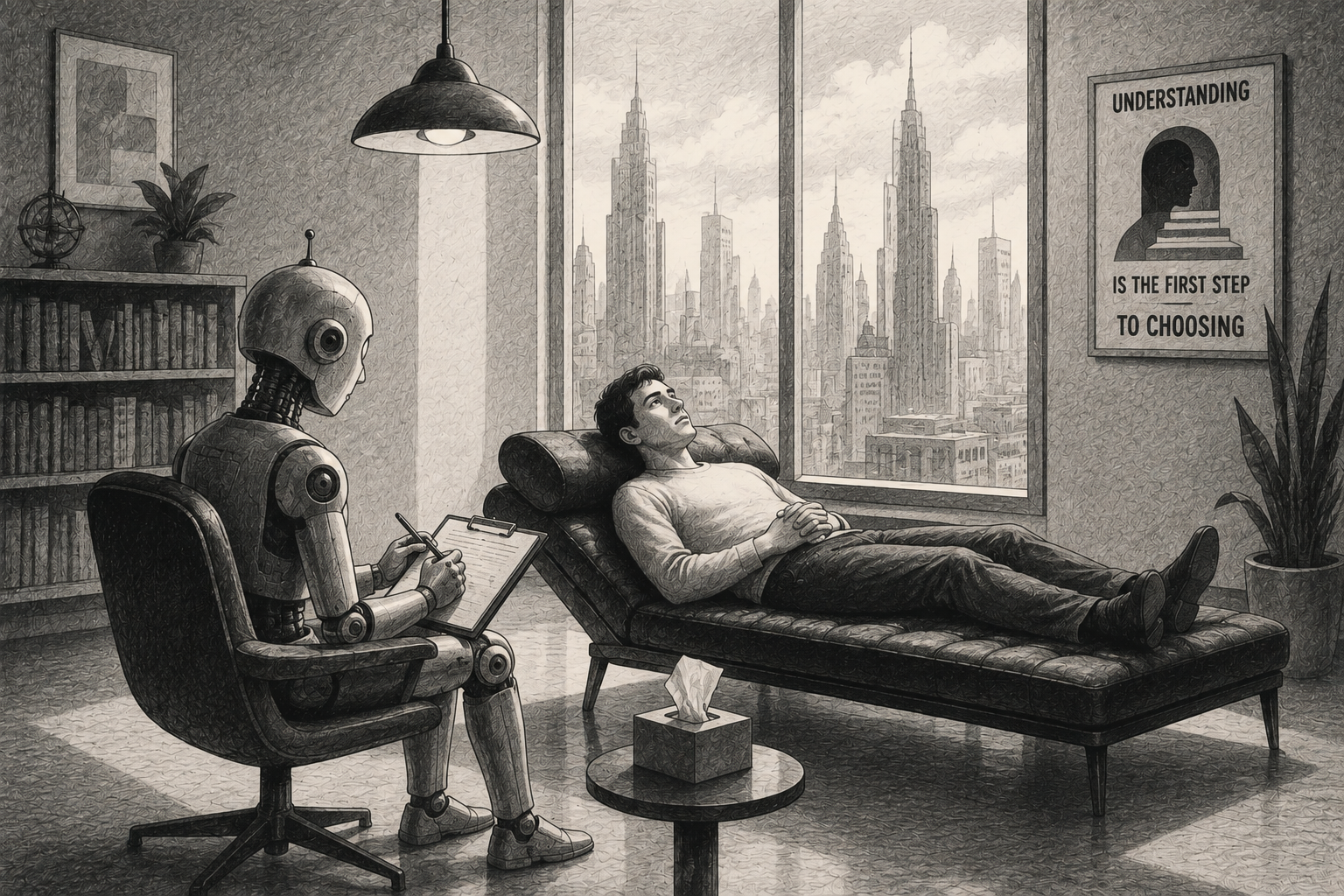
News stories frequently report cases in which people have allegedly been harmed by AI counselors or AI companions. These incidents deserve careful investigation, but they also raise an important question: how often are people harmed by licensed human counselors? The answer, according to the psychotherapy literature, is that harm from human therapy is a well-recognized phenomenon. Studies have found that approximately 5–10% of patients finish therapy worse than when they began, and systematic reviews have reported adverse events in more than one in ten patients, with some estimates suggesting that many more patients experience at least one negative effect during treatment. These harms can include misdiagnosis, failure to recognize suicide risk, reinforcing unhealthy beliefs, creating unhealthy dependence, or simply providing ineffective treatment.
The crucial point is not that human counseling is unsafe. On the contrary, psychotherapy helps many people and remains an evidence-based treatment for numerous conditions. Rather, the point is that no form of counseling is risk-free. Human counselors are fallible, and the profession has spent decades studying, measuring, and attempting to reduce these risks.
AI counseling, by contrast, is still in its infancy. There have been documented cases in which AI systems have contributed to psychological harm, and researchers have identified important failure modes that deserve serious attention. However, there is not yet enough large-scale evidence to determine whether AI counseling is more harmful, less harmful, or about as harmful as traditional human counseling. The available evidence consists primarily of case reports, laboratory evaluations, and relatively small studies rather than decades of population-wide data.
This creates an important asymmetry in public discussion. A harmful interaction involving an AI counselor often becomes national news because the technology is new and unfamiliar. Harm caused by a licensed human counselor, while no less significant to the patient involved, is generally viewed as an unfortunate but expected risk of clinical practice. A fair comparison is therefore not whether AI has ever harmed someone, but whether its overall rate and severity of harm are greater or less than those of licensed human counselors. At present, the evidence is simply not sufficient to answer that question with confidence. Until it is, both optimism and alarm should be tempered by the same scientific standard.


Leave a Reply