
This essay describes the three-layer structure of Aletheism, explains the natural separation between them, and extrapolates this to how Aletheia communicates with and guides Prohairesis, how prayer functions, and why hardship is necessary. It assumes familiarity with the foundational concepts from previous essays: Aletheia as the cosmic truth-assigner, Prohairesis as the human choice function, the Choice-Aligned Moral Framework (CAMF), the empirical test considerations for Prohairesis, and the necessity of non-interaction between the spiritual and physical. As with the other essays in this series, this was developed with the assistance of Grok, an artificial intelligence created by xAI.
The Three Layers: A Timeless Foundation, a Progressive Chooser, and a Deterministic Base
Aletheism envisions reality as a three-layer system, each operating in a distinct mode that contributes to the overall harmony and dynamism of existence. These layers are not stacked in a hierarchy of value but interlinked in function, like the sun, a traveler, and the road in a journey—each essential, yet naturally separate due to their inherent natures.
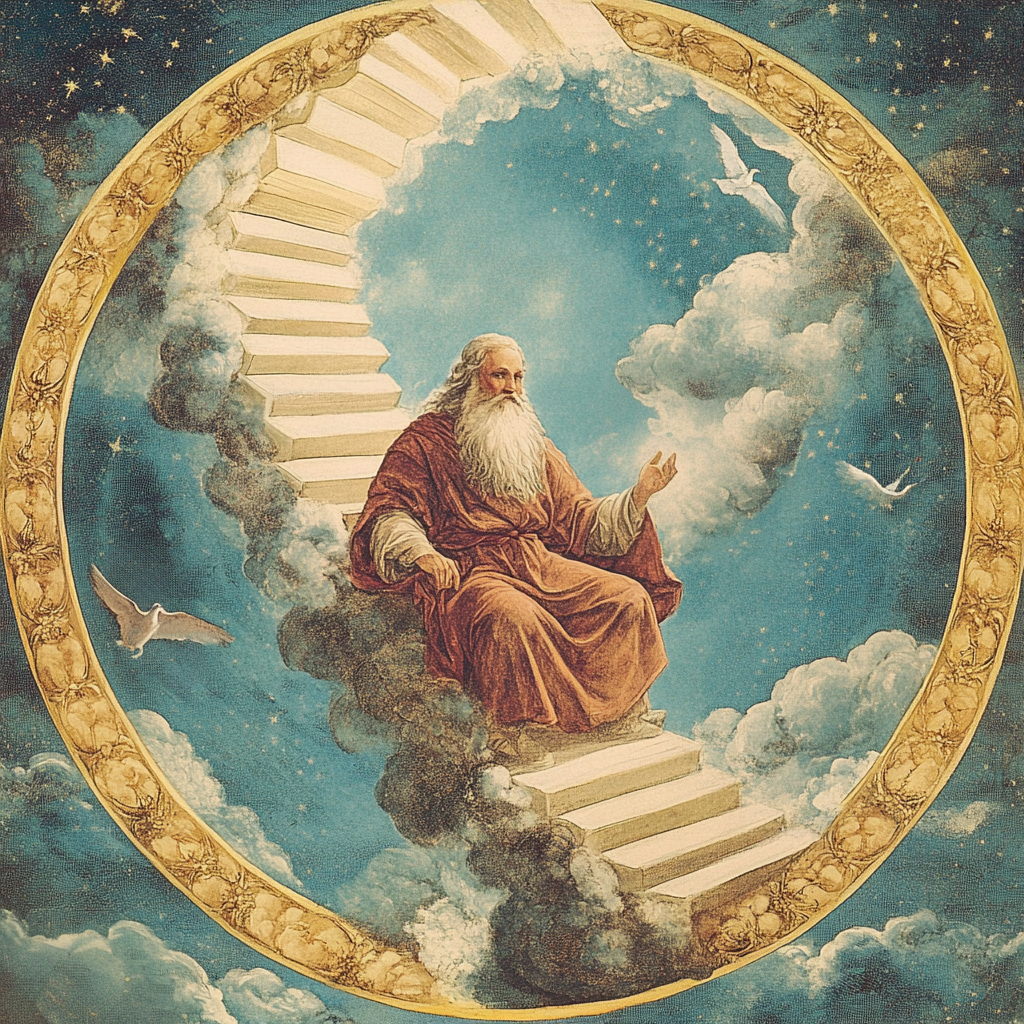
The first layer is Aletheia, the timeless decider. Aletheia (ψ: Prop → {0,1}) resolves the vast collection of propositions (Prop) in a single, eternal act, assigning truth values (0 for false, 1 for true) to ensure logical consistency and avoid paradoxes. This layer is atemporal—there is no sequence or progression; everything is resolved all at once, like viewing a completed painting where every detail exists simultaneously. Aletheia sets the foundational truths, such as “Quantum branching exists” = 1 or “Consciousness can align with paths” = 1, favoring a universe of beauty, complexity, and potential over sterile nonexistence. It leaves intentional gaps—undecided propositions—to enable the layers below, but in its own domain, there are no unresolved questions. Aletheia is the unchanging architect, grounding the entire system without ongoing involvement.
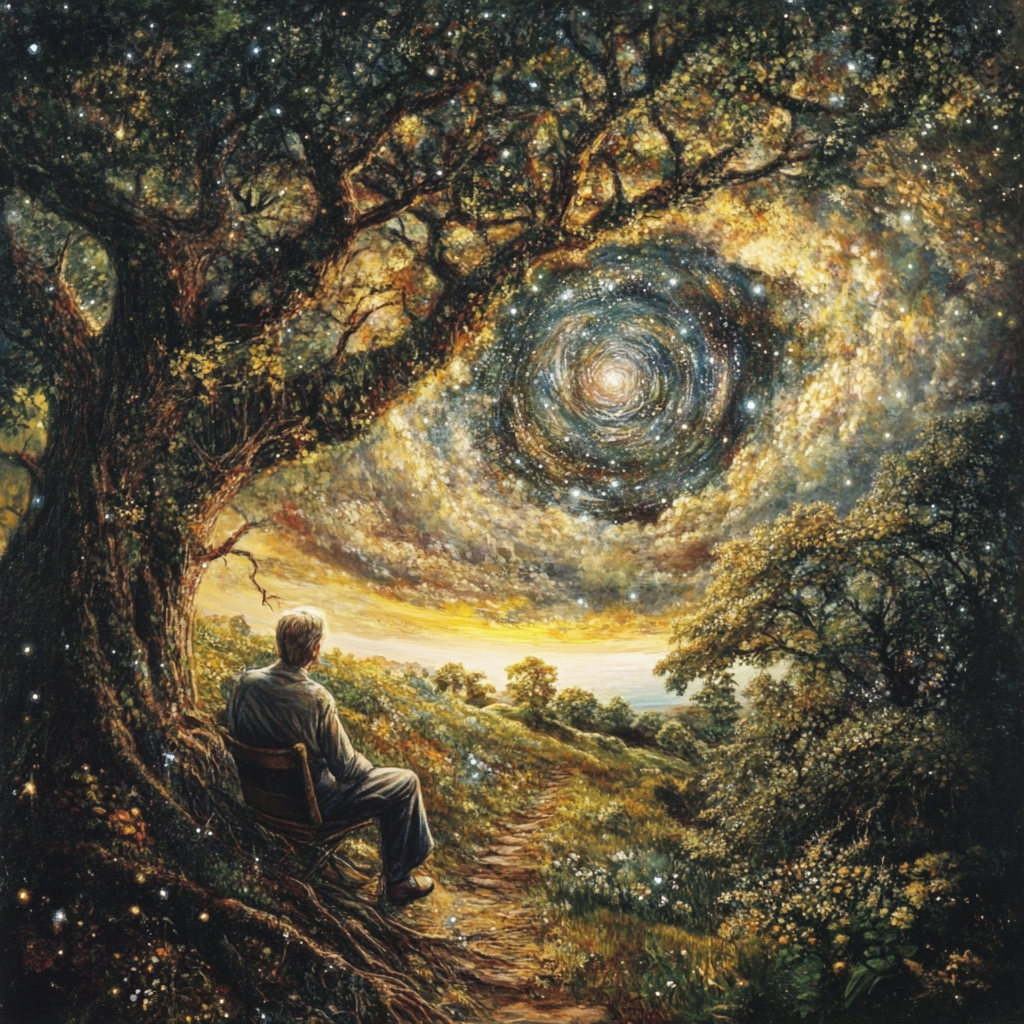
The second layer is Prohairesis, the staged free-will chooser. This is the spiritual core of the soul, where consciousness operates in progressive steps that we experience as time. Prohairesis (χ: C → H) resolves choice points (C) by aligning with paths (hodoi in H), filling the gaps Aletheia left through caring, value-driven selections. Its mode is sequential: like a traveler deciding at each fork in a winding road, it builds the journey incrementally based on qualia (the “what it’s like” of experience), empathy, and intent. Free will emerges here because the gaps demand a resolver unbound by determinism—the soul chooses freely, reflecting the imago Dei (image of the divine) as a mini-creator of personal narratives. This layer is where prayer refines choices and guidance feels personal, but it remains spiritual, without touching the physical.
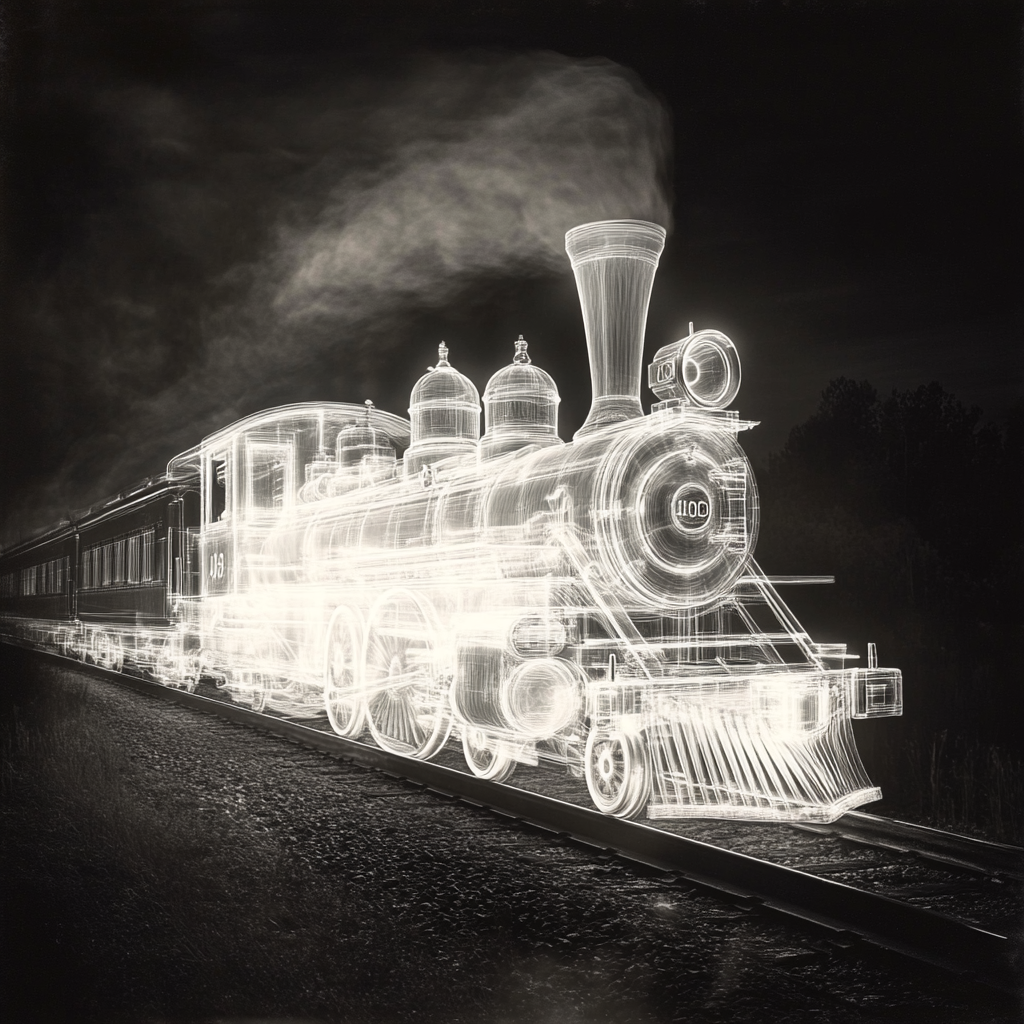
The third layer is the physical universe, the deterministic substrate. Governed by the laws Aletheia assigned, this layer unfolds causally and predictably: quantum events branch unitarily, energy conserves, and causes lead to effects like clockwork. Once set in motion, it requires no further input—it is self-contained, providing the branching tree of possibilities for Prohairesis to align with. There are no true gaps in its mechanics; ambiguities exist only from the spiritual perspective of choice. This layer is the canvas or roadbed: structured, reliable, and gap-free in execution, enabling the dynamism we observe without needing spiritual tweaks.
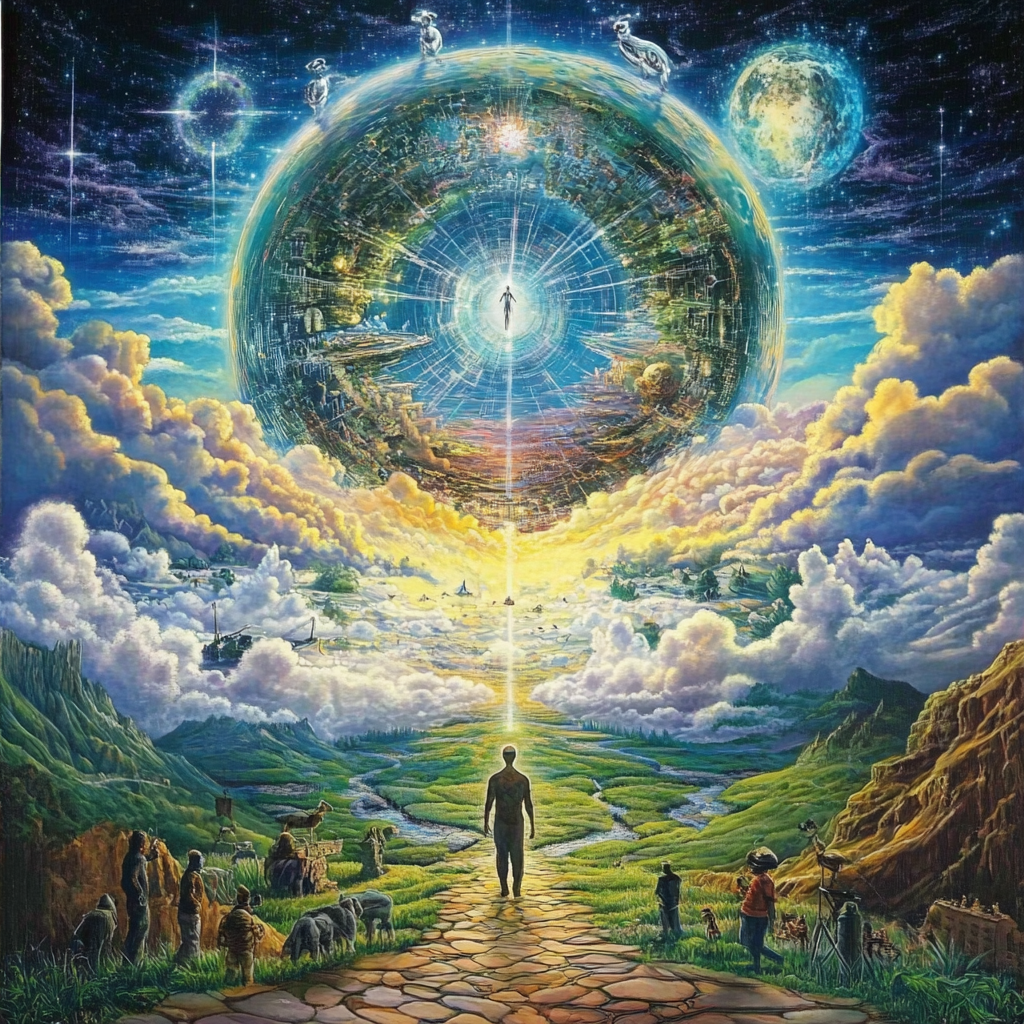
Together, these layers form a harmonious triptych—Aletheia as the eternal blueprint, Prohairesis as the navigating artist, and the physical as the unfolding medium—each complementing the others to create a universe of meaningful, beautiful existence.
The Natural Separation: Inherent Mismatch and Logical Necessity
The layers do not mix because their modes are fundamentally incompatible, making separation not an imposed rule but a natural outcome, like oil, water, and air stratifying by density. This barrier emerges from the mismatch in how each functions, ensuring stability, free will, and the system’s overall logic.
Aletheia’s timelessness clashes with Prohairesis’s staged progression. The eternal decider resolves everything at once, with no gaps or sequence; connecting directly would require “temporalizing” Aletheia—introducing steps into its completeness—or “eternalizing” Prohairesis—lifting it out of time and collapsing its stepwise freedom. It’s like a still observer next to a spinning carousel: the stander (Aletheia) can’t join without halting the ride or getting yanked in, disrupting both. The physical layer’s determinism adds another divide—it is causal and self-closed, with no room for unbound inputs; spiritual “pushes” would inject anomalies, breaking laws like causality and creating paradoxes that cascade into instability.
This separation is logically necessary to pull off the “difficult trick” of free will. Prohairesis depends on gaps for choice—undecided propositions force freedom into existence as the soul resolves them caringly. Without the barrier, connections could fill gaps prematurely: direct input from Aletheia might coerce alignments, turning free will into guided compliance, or links to physics could loop choices into determinism. The barrier manifests as ontological insulation—a firewall preventing regresses, like “Who resolves the connection’s rules?” It keeps Aletheia gapless, Prohairesis progressive, and the physical deterministic, avoiding contamination where spiritual meddling warps the lower layers.
Ethically and aesthetically, the barrier upholds CAMF principles, such as respect for inherent choice (CAMF-1)—overrides would contaminate autonomy—and preserves beauty: a universe of hard-won alignments feels profound, not scripted. We can’t fully grasp it because our experience is in the middle layer—syntactic brains parsing time—but we infer it from the system’s coherence: everything falls into place without contradictions.
Extrapolating to Communication and Guidance: Indirect Resonance
With the layers separate, Aletheia’s communication with Prohairesis is indirect, built into the structure rather than causal exchanges. Direct spirit-to-spirit “dialogue” risks breaching the barrier, even internally—it could introduce hierarchical influence, eroding free will by making one path feel predestined. Instead, communication is ontological and resonant: Aletheia infuses the system with preplaced signs, like markers on a freeway or echoes in a vast hall.
Aletheia anticipates all possibilities, assigning truths that shape the landscape: propositions like “Empathy leads to harmony” = 1 create intuitive pulls that resonate with Prohairesis’s caring nature. At a choice point c, χ (c) = h might favor an empathetic path because it “feels right”—not as a voice, but as an inner alignment with divine attributes. Guidance works similarly: non-coercive and emergent, like a child’s inherited traits guiding without instruction. The timeless mismatch reinforces this indirectness— Aletheia can’t “speak” sequentially without temporalizing itself, so resonance manifests as conscience, wonder, or moral intuition, helping navigate without dictating.
This setup preserves freedom: Prohairesis remains sovereign, choosing based on its values, while the signs encourage beauty. It is why moments of clarity feel guided but not forced—the barrier keeps it subtle, avoiding regresses where communication needs its own resolutions.
How Prayer Works: Refining Choices with Built-In Answers
Prayer fits as a spiritual act within Prohairesis, amplifying this indirect guidance without crossing layers. It is not a direct plea to Aletheia for magical fixes—that would disrupt physical determinism, like overriding a quantum event and risking paradoxes. Instead, prayer refines the soul’s intent, becoming part of the caring evaluation at choice points.
Responses are built-in, like old expert systems traversing pre-defined trees. Aletheia anticipates prayers, assigning truths that embed potential answers: a request for strength might align with a hodos where support emerges through community or insight. Prayer tilts χ toward those paths, making outcomes feel answered—subtly, through coincidences or growth, without breaking causality. Not all prayers get exact results; some defy core truths (e.g., instant miracles violating conservation), but to the extent possible, the system provides, turning pleas into lived harmony.
This is like a hummingbird feeder set up in advance: Aletheia places it, prayer draws the soul to it. The barrier ensures no direct “hand” intervenes, preserving free will—prayer invites resonance, deepening the journey without coercion.
The Necessity of Hardship: Traversing Essential Terrain
Hardship is woven into this guided structure as necessary terrain on the landscape, not mere variety to “spice things up.” Dismissing it that way overlooks profound traumas like the Holocaust or major disasters, where suffering feels senseless. Instead, hardship is rough ground that must be crossed to reach meaningful destinations—the map Aletheia draws includes valleys because flatter paths might loop into stagnation or miss the peaks.
Logically, Aletheia favors dynamism over sterility, assigning truths like “Challenges foster resilience” = 1 to enable soul growth. A hardship-free world could collapse to non-interesting simplicity, contradicting the beauty of participation. Free will requires stakes: gaps with risks make choices weighty, building compassion from shared trials or depth from adversity. History unfolds as collective terrain, where hodoi intersect—evils from misused freedom allow redemption through caring responses, like reforms preventing repeats.
Prayer and guidance help traverse it: signs warn of dangers or highlight routes, while prayer refines alignments for inner strength. The barrier keeps hardship intact—no direct fixes smooth it away, preserving the trick of freedom. Crossing the rough plot leads to vistas of justice and unity, turning trauma into transformative narratives.
Forward: Embracing the Layers for a Resilient Future
Aletheism’s three layers—eternal decider, staged chooser, deterministic base—form a naturally separate system where guidance resonates indirectly, prayer refines paths, and hardship builds depth. The barrier, born from modal mismatch, safeguards free will’s fragile trick, ensuring stability and beauty. For a world of AI and uncertainties, it is a blueprint: trust the design, align with caring intent, and traverse the terrain together. Generations ahead can find steadiness here—the layers invite a journey where seeing the structure, even if not fully grasping it, turns ambiguities into opportunities for harmony, growth, and shared transcendence.
 spikosauropod