Archive | Uncategorized RSS feed for this section

Consciousness, A Simple Model

25 Apr

Disclaimer: This essay is not intended as an effort to present a rigorous theory of consciousness. Rather, it is an effort to demonstrate how substance dualism is compatible with modern physics. To avoid appearing flippant, I have presented it in a straightforward, matter-of-fact manner.

For many centuries, physicists pondered whether light is the result of a wave function or if it is a particle like a tiny billiard ball. This eventually led to the famous double-slit experiment sometimes attributed to Thomas Young:

In the basic version of this experiment, a coherent light source such as a laser beam illuminates a plate pierced by two parallel slits, and the light passing through the slits is observed on a screen behind the plate. The wave nature of light causes the light waves passing through the two slits to interfere, producing bright and dark bands on the screen—a result that would not be expected if light consisted of classical particles. However, the light is always found to be absorbed at the screen at discrete points, as individual particles (not waves), the interference pattern appearing via the varying density of these particle hits on the screen. Furthermore, versions of the experiment that include detectors at the slits find that each detected photon passes through one slit (as would a classical particle), but not through both slits (as would a wave). These results demonstrate the principle of wave–particle duality. (Wikipedia, Double-slit experiment)

As this paragraph explains, the results indicate that light exhibits properties of both waves and particles.

Another even more curious property that is revealed by this experiment is the apparent influence of observation on the behavior of the wave/particle. If a detector is placed at either of the slits so that it is possible to determine which slit a particle of light passes through, the diffraction pattern indicating that it is a wave disappears. In other words, if it is possible to demonstrate that what is being observed is a particle, the light no longer behaves like a wave. This phenomenon is sometimes referred to as “wavefunction collapse”.

The explanation of this behavior offered by physicist Hugh Everett was that the light always passes through both slits. However, when it is possible to know which slit it passes through our universe splits into several branches. We branch into a universe where it passes only through a single slit. This explanation leads to the “many worlds” interpretation of quantum mechanics:

The many-worlds interpretation is an interpretation of quantum mechanics that asserts the objective reality of the universal wavefunction and denies the actuality of wavefunction collapse. Many-worlds implies that all possible alternative histories and futures are real, each representing an actual “world” (or “universe”). In lay terms, the hypothesis states there is a very large—perhaps infinite—number of universes, and everything that could possibly have happened in our past, but did not, has occurred in the past of some other universe or universes. (Wikipedia, Many-worlds interpretation)

In the many worlds interpretation, every variant of the experiment takes place. However, we are only able to experience one of these worlds, so we think the particle passes through just one slit.

However, this interpretation leads to a conundrum. Exactly what is it that continues on to one or the other of the worlds? If both universes exist and are equally valid, why do we experience just one of them?

The explanation for this conundrum is obvious. What passes into one of the many resultant universes is our consciousness. This explanation not only explains the experience of many worlds. It also explains properties of consciousness.

For centuries, philosophers have pondered how it is possible for something like consciousness, that is unified and semantic in nature, to be supported by the machinery of our universe that seems to be disjoint, mechanical and syntactic.  A solution offered by Renée Descartes was that consciousness is made of a different substance than the rest of the universe. However, if this is the case, how is it able to interact with the mechanical universe?

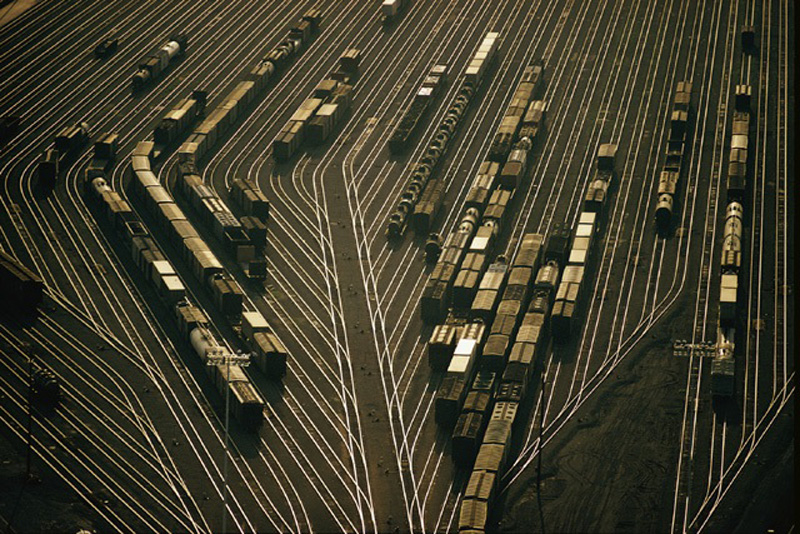
The solution I propose is that the substance does not interact with the mechanical universe. It moves along it like a train moves along a track. In fact, the only thing in the universe that actually moves is consciousness. When consciousness encounters a quantum event, it chooses from one of many tracks like a train moving through a switching yard:

ngs0_6769

The appearance of motion in the universe is actually an illusion created by the motion of consciousness through it. This is similar to the illusion created when we look out of the window of a moving train. The world outside seems to be moving by when, in actuality, what is moving is the train. Consciousness passes through all the twists and curls of what has come to be called the quantum foam. As it does this, it experiences the changes that we refer to as physics.

If consciousness has no influence on the universe, how is it able to express itself through the human brain? The answer is that it does not. What it actually does is chose from moment to moment which of many possible brains it will occupy:

Multiple Brains

The reason why we are apparently able to recognize that we have consciousness and express that we have consciousness is that we chose brains that are configured in a way that represents the recognition and expression of this experience.

If each of us chooses from moment to moment which of many universes we will pass into, does this mean that we may find ourselves in a universe where everyone around us is actually a non-conscious zombie?

This does not seem like a reasonable idea, since the people around us also report the experience of consciousness and seem to exhibit the indicative behavior. What I propose is that everyone’s consciousness is tethered in some way so that they all have to choose the same universe. It even seems likely that we are all part of a single consciousness that is expressed through different brains. Possibly, every conscious being, from termites to high priests, is part of a single conscious substance.

An idea that has entered into philosophy since people first began to contemplate the human experience is that everyone’s “soul” is connected at some deeper level. It may turn out that this idea, previously accessed only through deep meditation, has a basis in the actual mechanics of the universe.

As for what the substance of consciousness actually is, this may always be a mystery. Possibly it is a kind of choice function as described in earlier entries. The assumption made by modern scientists is that consciousness is an artifact of physics, chemistry, or biology. It appears more likely, if the preceding theory is correct, that the universe is actually a kind of playground created so that consciousness has a place and manner to express itself. If this is correct, our collective consciousness may be moving toward some ultimate objective. Perhaps the barriers between our separate expressions of consciousness will be removed and we will realize that we are all one mind. Perhaps the barriers of the universe will be removed or altered so that our consciousness can experience it in a different way. Perhaps the universe will merely unfold into a much more interesting playground.

The Embarrassment of Artificial Minds

11 Mar

People working in artificial intelligence are often confronted with an embarrassing question. They are asked if they are attempting to create artificial “minds”.  The answer they should logically give is, “No, minds are a topic in psychology. What we are attempting to create is artificial intelligence.” If pressed on this point, they should draw a sharp distinction between minds and intelligence by explaining that minds have mental states like “consciousness”, and intelligence is the processing of information.

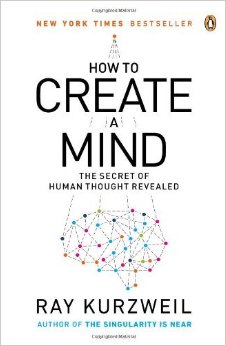
However, artificial intelligence investigators are their own worst enemies. They are not content to say that they are interested in making machines that can process information in ways that are equal to or superior to humans. They insist that they are attempting to create conscious machines. Ray Kurzweil, a pioneer in artificial intelligence, has even gone so far as to title his most recent book How to Create a Mind.

Image

Of course, Ray Kurzweil has a reason for insisting that computer intelligence will eventually equate to human consciousness. Ray Kurzweil wants to live forever. One of the ways that he proposes to live forever is to “upload” his mind into a new substrate that is essentially a computer. This procedure can only be successful if one assumes that an algorithm that mimics the human brain and that is running on a computer can also be conscious. This is the motivation of nearly all Transhumanists who insist that computers can be conscious.

There have been many mysteries in science that were eventually explained. Among these mysteries are life and intelligence. Through experimentation, we have been able to demonstrate that life is actually the result of chemical interactions. The investigation of intelligence has followed a similar pattern. We cannot yet completely explain it, but we have demonstrated, at least in part, that intelligence is the result of complex algorithms. Consciousness is still considered to be mysterious. The assertion is often made that since we were able to explain the mysteries of life and intelligence, we should also be able to explain consciousness. However, there is an important distinction.

When we initially observed that life and intelligence are mysterious, we meant something very different from when we say that consciousness is mysterious. Life and intelligence are accessible phenomena. Even when we could not explain them, two people could measure them and report comparable results. They could not explain the results, but they had reproducible results about which to attempt an explanation.

Consciousness is different. When discussing human cognition, we are often compelled to introduce an additional aspect to the discussion. We report a very personal experience that we have agreed to call consciousness. The key element of this experience is that it “seems mysterious”. The only reason why our attention is drawn to this phenomenon is that it seems to contradict our intuitive sense of what a material object (the brain) should be able to accomplish. It seems like a material object should only be able to be “there”, but somehow consciousness is “here”. Consciousness could almost be defined as “that which seems to contradict our intuitive notion of science”. But this definition renders consciousness a priori nonsense…at least in the arena of hard science. Consciousness is not a mystery in the sense of an unexplained observation. It is not an observation that can be defined and reproduced but that’s explanation eludes us. Consciousness is Mysteriousness. It is mysticism.

Note that humans report many similarly subjective experiences, some of which are taken seriously and some of which are not. They report the ability to leave their body. They report the ability to see other people’s auras. They report the ability to hear God.

Image

Some investigators, such as Daniel Dennett, claim to have pinned down consciousness; but even a cursive examination of their writings shows that what they have actually pinned down is certain characteristics of human cognition that they assume are associated with consciousness. No scientist has ever found consciousness. There is no such thing as a consciometer. If someone claimed to have discovered an example of consciousness somewhere other than a biologically associated mind, they could not provide an objective demonstration of this discovery.

Note that I am not saying consciousness does not exist or that it is unimportant. In the psychology and philosophy of mind, it definitely exists and is very important. As John Searle points out: “where consciousness is concerned, the existence of the appearance is the reality.” No experience that so many people report should be dismissed. However, it is not necessarily the case that everyone reports consciousness. Some intelligent educated people have reported that they have never been able to grasp what is meant by consciousness. Also, there are some important theorists who argue that consciousness (specifically the hard problem of consciousness) is a trick of perception. Daniel Dennett considers the hard problem of consciousness to be an illusion created by mental sleight of hand similar to an illusionist’s tricks. What all of these doubts and contentions suggest is that consciousness is a very human concern. It is a problem of the human experience. It is not a problem of intelligence. It is certainly not a problem of computation. No handheld calculator ever malfunctioned due to a lack of the internal experience described by humans as consciousness.

I am also not saying consciousness can never be explained. We may eventually find the basis of consciousness. We may even invent something that could reasonably be called a consciometer. Similarly, we may eventually prove the existence of out of body experience, auras, and God. What I am saying is that consciousness is not the same kind of mystery as other mysteries encountered by science. It is not an accessible measureable phenomenon that is mysterious because we cannot explain it. It is a completely undetectable subjective experience that is only of concern precisely because the subjective experience of it is regarded as mysterious.

Computer science is a traditional hard science. It can be experimented with and it yields hard, reproducible, directly measurable results. Since computers are often able to replicate aspects of human behavior that we have labeled intelligence, we call those results “artificial intelligence”. But that does not justify introducing the mystical quality of mind that we have decided to call consciousness. Mathematicians do not say that their proofs and theorems are spells. Computer scientists should not say that their algorithms are mysticism. In other words, they should not introduce the unrelated, soft scientific, subjective experience that has been labeled consciousness.

Above, when I explained Transhumanists’ motivation for believing computer programs can be conscious, I probably gave Transhumanists too much credit. The fact is that it will almost certainly be possible in the near future to translate the functionality of most of the human brain to a computer substrate. However, Transhumanists will only be satisfied with this translation if they can be assured that their subjective human experience of consciousness will also be translated. In other words, they need to believe that what they feel that they are will become what the resulting program actually is. Moreover, they need to believe that who they feel that they are will become who the program actually is. They need to believe that the “there” that is mysteriously “here” will become the “here” that is ultimately “there”. The philosophical contortions that Transhumanists go through to convince themselves that an indefinable subjective characteristic of object A will somehow become an actual characteristic of object B are remarkable.

Artificial intelligence investigators should declare an immediate and complete moratorium on all discussion of creating “minds”. They should draw a sharp distinction between mental states and intelligence and make it clear that what they are attempting to create is intelligence. They may eventually be able to make machines that are more intelligent than people. These machines may exhibit all sorts of behavior that was once thought to be the province of human beings. However, they should always remember that these things are machines. They are mechanical devices—devices comparable to automobiles and clocks—that utilize algorithms that sometimes mimic aspects of human behavior. Machines are machines and people are people. Until someone demonstrates a workable and reliable consciometer, there will never be a logical scientific reason to imagine otherwise.

A Nursery Rhyme for Our Time

24 Jan

(dedicated to Extropia DaSilva’s primary)

Sexy Exy built a bot,

And hoped to fill its head with thought;

But it was not the bot she sought;

For where she thought was thought was naught.

And when the bot she wrought could not

Procure a soul, she sat and jot

A thought or two of why it ought

To have the sacred soul she sought.

But sacred souls are not begot

By gears or wires however wrought.

And thus shall be the empty lot

Of every Sexy Exy bot.

And if in time it pens a plot—

A story filled with love and fraught

With tears and sighs—it matters not;

For soulless is the Exy bot.

The Synthetic Republic

16 Jan

This topic will not make sense without at least a basic understanding of the Technological Singularity. The Technological Singularity is best described by I. J. Good:

Let an ultraintelligent machine be defined as a machine that can far surpass all the intellectual activities of any man however clever. Since the design of machines is one of these intellectual activities, an ultraintelligent machine could design even better machines; there would then unquestionably be an ‘intelligence explosion,’ and the intelligence of man would be left far behind. Thus the first ultraintelligent machine is the last invention that man need ever make.

I am a firm believer in the Singularity as described by Good. However, since there are numerous ways that the Singularity could come about, I have developed a general definition that covers every contingency:

The Technological Singularity is a hypothetical future event wherein available intelligence combined with understanding of intelligence initiates a rapid intelligence amplification feedback loop.

It is plausible that the Singularity will come at an unknown time by unknown means and from an unknown source. However, there is some reason to believe that it may come about as part of a controlled process. Organizations like the Defense Advanced Research Projects Agency (DARPA) and the National Security Agency (NSA) have exhibited a will and propensity to monitor every living human.

DARPA has the following established mission:

DARPA’s original mission, established in 1958, was to prevent technological surprise like the launch of Sputnik, which signaled that the Soviets had beaten the U.S. into space. The mission statement has evolved over time. Today, DARPA’s mission is still to prevent technological surprise to the US, but also to create technological surprise for our enemies. Stealth is one example where DARPA created technological surprise. (Wikipedia, DARPA)

While the NSA was originally intended to protect Americans from foreign threats, there is little doubt that they have taken it upon themselves to protect Americans from everything including other Americans:

WASHINGTON — In more than a dozen classified rulings, the nation’s surveillance court has created a secret body of law giving the National Security Agency the power to amass vast collections of data on Americans while pursuing not only terrorism suspects, but also people possibly involved in nuclear proliferation, espionage and cyberattacks, officials say. http://mobile.nytimes.com/2013/07/07/us/in-secret-court-vastly-broadens-powers-of-nsa.html?hpw=&pagewanted=all&_r=0&amp

The existence and behavior of organizations like DARPA and the NSA suggest that the United States fully intends to remain in control of an unfolding Singularity. Possibly, to help carry out this mission, the NSA has established a vast data center in Utah. Its ostensible purpose is to collect spy data and metadata, but its actual purpose is unclear.

NSA Data Center Utah

There is some indication that the United States government may be forming something like a “Manhattan Project” for artificial intelligence (AI) through the framework of Google and possibly some other corporations. Google has bought the robotics company Boston Dynamics, famous for developing robots like the LS3 and Atlas that are apparently intended for military use. However Boston Dynamics has received a great deal of funding from DARPA. It seems unlikely to an extreme that the United States government has suddenly turned over important work to Google with no strings attached. Also, Google has exhibited a lot of strange and suspicious behavior. Among this behavior is the acquisition of four floating barges built between 2010 and 2012 that’s precise function has never been divulged. Google has also been hiring numerous AI experts such as Geoffrey Hinton and Ray Kurzweil. It is clear that the United States government has been spying on U.S. citizens via Google and other online services. It is not entirely clear how complicit Google and others are in these operations.

If the United States government intends to control the Technological Singularity, they must intend to set up some kind of system based on this control. It would be unnatural—and indeed un-American—for these people to do away with our existing republic and try to replace it with something else. For this reason I suspect that their machinations will ultimately lead to something I have labeled a synthetic republic (SR).

In a republic, people do not have direct democratic control. Rather, they elect the people who make administrative decisions for them. This form of government has several advantages over a direct democracy. Most people cannot take time from their regular work to oversee things like the building of bridges or national defense. As an example, it would certainly be impossible for someone in Kansas to help write a treaty with a country in the Middle East. People who cannot attend to these responsibilities directly appoint other people who are suitable to the task. Often, people lack the knowledge and expertise to oversee a task directly. However, these people may be able to recognize those professionals whose credentials and experience do make them suitable to the task. Moreover, the selection of representatives in a republic is not made in a vacuum. Potential leaders are vetted and recommended by credentialed organizations and experts whose association with them is appropriately impartial. Leaders in a republican form of government who do not perform well may not be reelected and their ideas may be discredited.

This form of government is not perfect, but it has an excellent track record. The United States has prospered for over 200 years with this kind of system. If it were completely unworkable, the United States would at least have degenerated to third world status.

In an SR, responsibility for governance is removed from direct democracy by one more layer. People vote for those who represent them. However, the people they vote for merely oversee the behavior of AI systems and accompanying robots. The AI systems make the administrative decisions and the robots carry them out. The human government is reduced to the role of monitoring their activities and overriding their activities if they seem to be moving in an undesired direction. Hence, in an SR, AI assumes a role very similar to the United States executive branch. Simpler systems comparable to this are already extant. For example, online services like Amazon and eBay are largely automatic. Humans decide what to buy and sell, but auctions, sales, and shipping arrangements are monitored and controlled automatically. The SR would consist of several redundant systems that constantly confer and double-check each other. The human representation in an SR could be quite simple. It might consist of a thousand jurors representing a thousand separate districts who require a two-thirds majority to override any decision made by the SR. They could stay in contact through some kind of network where they can propose decisions to override the SR and vote on them immediately.

There is a somewhat informal observation that has been made by many experts in technology. It is called Moore’s law of mad science. In the words of Eliezer Yudkowsky, co-founder of the nonprofit Machine Intelligence Research Institute, “Every eighteen months, the minimum IQ necessary to destroy the world drops by one point.” This “law” is based on the observation that emerging technology makes it possible for a person with little expertise in a technical field to fully exploit the capabilities of that field. A good example of this law in practice is the use of 3D printers. Recently, designs have been circulated for plastic and metal guns that can be produced by anyone who owns the appropriate 3D printer. Similar devices are being developed for the manufacture of proteins.
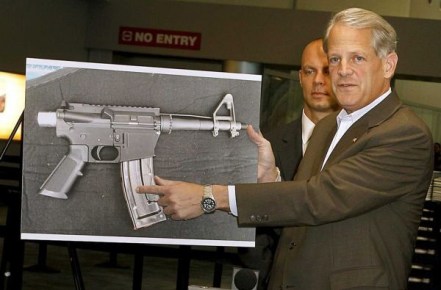
Printed Gun

As we move toward the Technological Singularity, it will be possible for people with only a basic knowledge of AI and robotics to exploit the capabilities of these technologies to produce revolutionary and possibly dangerous new technologies. The sad but inevitable fallout of this development is that people simply cannot be allowed to live unsupervised.

In an SR, AI systems will constantly monitor the behavior of every living person in minute detail. Citizens will have no actual privacy; but they will not be monitored directly by humans, so they will not experience a strong sense of intrusion. At one time, such a system would have seemed unthinkable. However, with the advent of Facebook, Twitter, navigation programs, and discount cards, it has become clear that people are willing to sacrifice their privacy to machines if there is sufficient advantage to be gained. This is fortunate, since it is also clear that organizations like the NSA fully intend to relieve people of any true remaining privacy through the collection of metadata. There is little doubt that the NSA’s metadata will ultimately amount to complete detailed monitoring.

Many people have expressed fears that an AI system like the one I have described will see people as unnecessary or even as a threat and eliminate them. However, this fear is actually an example of anthropomorphism. The human instincts for dominance and vigilance are the result of literally billions of years of competing for food, water, mates, land, shelter, and other resources. Machines will never have to compete for these things and will never develop the associated instincts. The machines will have greater than human intelligence, but they will have only the motivation we give them. If we give them the motivation to look after us in a manner we see fit, that is the only behavior they will exhibit.

As these AI systems become more sophisticated, the human part of their monitoring will become increasingly passive. Humans from all over the world, and eventually all over the solar system, will be selected by popular vote to do the monitoring. Their jobs will be positions of status, but these jobs will amount to little more than the act of verbally or possibly mentally signing off on the designs of the machines.

In addition to human supervision, the machines of the synthetic republic will have large knowledge graphs that govern their behavior. These knowledge graphs will include large ethical and moral components. These ethical and moral components will grow in extent and sophistication as the AI systems are given more responsibility and leeway. They will be perfected, in part, by intervention from their human supervisors. The AI systems using the graphs will evaluate moral and ethical decisions in a probabilistic manner similar to IBM’s Watson. For this reason, they will never make a tragic decision, even if they may make a decision that will occasionally be questioned or even overridden by their human supervisors.

In time, the human supervision of these systems will become so passive that it will be largely symbolic. Humans will always have the comfort, guaranteed by the systems’ moral and ethical knowledge graphs, that they have the last word, but they will rarely see any reason to override them. They will come to assume that the machines have made better decisions than humans could make, and for better reasons.

Much of this discussion is based on the assumption that Singularity level AI will be developed under the auspices of the United States government. However, this need not be the case. Whichever government or body gets there first will have an important historical decision to make. Will they expand into world hegemony, or will they place themselves within a framework of some sort of world government in which they are merely one member? For a brief period of time, the developers of Singularity level AI will have more or less complete control. Hopefully, they will have the moral fiber of George Washington, father of the United States, and turn over the reins of power to a representative body.

Of all the emerging technologies that are subject to Moore’s law of mad science, the most problematic may be people’s own intelligence and their possible ability to improve their own intelligence through technological means. People who are too clever, may find ways to outsmart the system. Therefore, in addition to being constantly monitored, humans must never be allowed to possess direct unsupervised control of intelligence that rivals the SR. However, the intelligence of the republic is likely to increase at an astonishing rate, so it will be possible for humans to possess private intelligence that increases in proportion.

To prevent mischievous humans from tricking the human representatives who supervise the republic, they will also not be allowed to have direct unsupervised control of intelligence that is significantly greater than other humans. A maximum effective private I.Q. of 200 might be the standard. Since I.Q. is measured against a constantly revised mean, the average effective I.Q. of humans will be allowed to increase. Once again, this increase is likely to be rapid, since the I.Q. of the system as a whole will probably grow at an astonishing rate.

Machines will not have human-like motivation, but they could conceivably be infected by human-like motivation. All in all, humans are a poor model for synthetic intelligence. Their entire psychological makeup seems devoted to beating other humans. The little boy who excels at football or mathematics invariably expresses a fondness for outperforming his companions. As a group, humans have noble aspirations. As individuals, they are capricious and vindictive. Note that unions like the United States government, with its carefully crafted Constitution, are formed to protect people from their individual vice. For the aforementioned reasons, humans must not be allowed to copy their brains into AI systems until it can be guaranteed that their emotional makeup will be incapable of influencing the system as a whole. Nor can they be allowed to replace their brains incrementally with AI components, since this would amount to the same thing. However, while humans will not be immediately able to copy their personalities into AI systems, the danger of them doing this may quickly pass. The system as a whole will evolve rapidly. Therefore, certainty that copied human personalities will not corrupt the system may come rapidly.

I suspect that it will be unlikely for humans to copy their brains into machines as a means of achieving immortality. First, by the time it is possible to do this, it will be unnecessary. Ordinary repairs and replacements of body parts and refurbishing of brains will make corporeal immortality simple and practical. Second, it will soon be recognized that computer copies of human personalities are not greatly valued. People will have hundreds or even millions of samples of their own and other peoples’ personalities copied into AI systems for the purpose of performing every manner of experiment. These copies will be modified, distributed, and deleted with little regard. Finally, I suspect that by the time this procedure is possible, it will be generally understood that a computer copy of a person’s brain will not continue the person’s consciousness. This is a controversial topic and better elaborated upon at another time.

Economics in the SR will be capitalistic, but with a fluid system of automatic regulations that are implemented and enforced by the SR. Individuals will be almost unaware of the regulations unless they pursue projects that require large quantities of resources or involve significant risk. Judging from current trends, money in the SR will almost certainly be in the form of dollars. There will be no taxes. The SR’s revenue will come entirely from the leasing of materials.

As the SR expands into the solar system and further out into the universe, certain principles will be applied to personal ownership. Individuals will be able to own the configuration of objects, but they will not be able to own the materials that they are made of. Note that in current international law, it is illegal for individuals and individual governments to own extraterrestrial real-estate. All materials will belong to the SR and only be leased to individuals at a rate based on the actual materials leased and the volume of materials leased. As an example, it will be possible for someone to build and own a space station, but the materials that it is made of will be leased from the government. The more materials a person leases, the more they will pay per year per mole of materials. Thus, a person who is leasing extremely large quantities of materials will pay prohibitively high prices per mole. These rates will be calculated on the basis of the materials that are generally accessible and the total population. For this reason, it will make the most sense for businesses to be incorporated and have as many owners as possible. Corporations with large numbers of owners who have roughly equal ownership will get the best price on materials.

In a post Singularity world where no one has to work, all production that might be categorized as “labor” will be nearly free. Almost the only expense to anyone for anything will be in the form of rent paid for the use of other individual’s object configurations, fees paid for other individual’s intellectual property, or lease money paid to the government for the use of materials.

Individuals will interact with the SR through a method of their own choosing. A typical encounter with the SR might go something like the following. In this example, the person is named Phil and he has chosen to have the SR manifest as a female voice named Amy. The low prices in this example are a result of the availability of materials and the near zero cost of labor:

Phil: Amy, I would like to build a space station in orbit around Mars.

SR: What sort of a station do you have in mind?

Phil: I was thinking something on the order of a mile in diameter. It would be a ring station that uses centripetal force for gravity. It would house, perhaps, a thousand people in opulence.

SR: My records show that a license for that kind of station would be larger than your budget and the waiting period would be at least ten years. Is there some particular reason why you want to build a station around Mars? Other locations might be more suitable to your needs.

Phil: No, it doesn’t have to be around Mars. Where do you suggest?

SR: We are trying to encourage colonization of the outer Kuiper Belt. The license for that would be well within your budget and the waiting period would be only about one month.

Phil: That sounds fine.

SR: Here are some popular designs for the kind of station you have in mind. I will show them in the order that they have received the highest reviews.

The SR produces a screen and displays several images.
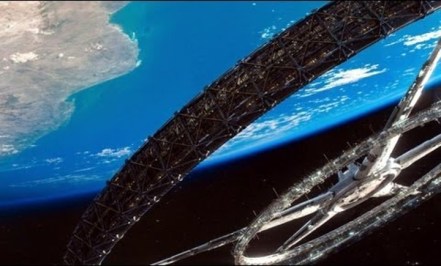
Ring Station

Phil: Wait, I like that one. How large is it?

SR: It is about 1.7 km in diameter and could easily house 1000 very comfortably.  It has particularly convenient space ports. However, there have been some complaints that maintenance access is a bit cumbersome. Of course, robots do all the maintenance, but they tend to consume more fuel. The initial designs for this configuration belong collectively to several individuals and cost $973.

While speaking, the SR shows Phil more detailed images and interior images.

Phil: Could those homes have a more colonial look?

The SR modifies the image.

Phil: Yeah, that’s what I mean. Also, fewer trees.

The SR modifies the image.

Phil: How about one road that meanders through the country side instead of those two along the edges.

The SR modifies the image.

Phil and the SR confer for several hours on the details. Eventually, Phil has the SR save the details and says that he will get back to it later.

Phil and the SR confer for several days. In addition to designing the station and choosing an exact location, they exchange information about where the materials will come from, how much it will cost to lease the materials, what kind of construction robots will be used, how quickly the robots will replicate, what will be done with the robots after they are done, and so forth.

Phil also receives messages from people who are interested in taking up residence in this kind of station. Some of the messages include suggestions on how the station should be laid out.

Phil and the SR eventually reach the final stages.

Phil: Amy, I think that is exactly right now. What will be the waiting period for that and how much will the license be?

SR: Since the modifications you have proposed are not too drastic, the waiting period will be exactly 19 days. The license will be $19,253. The initial designs for the station you have chosen to modify belong to numerous individuals and cost $973. Other fees come to $153. If you like, you can add a fee for the use of the alterations you have made. These designs are quite common, so I recommend a small fee. The materials lease will be $2138 per year for your first year and will be adjusted annually. Materials prices tend to go up about 2% per year. That includes fuel and repairs, but not modifications. These numbers are based on your stated intention to reside at the station at least 20% of your time or sell it to a qualified buyer who agrees to reside there at least 20% of their time. If you eventually decide to lease the station and forego residing there, an additional fee of $1,123,782 will be charged. If you decide to have the station recycled, the fee will be $154,021. Any decisions to have the station modified or dismantled will be limited by the presence of occupants. I recommend a rent for occupancy of a single unit on this station of $7.23 per year. There is a standard contract for prospective occupants that includes their options if the station is to be sold, leased, or recycled. If you are found to be in breach of contract, this will, of course, severely restrict your access to future resources. The government assumes all liability for approved projects.

Phil: OK, start the waiting period.

SR: I will begin the waiting period and verify your commitment before charging your account. Any additional modifications will either increase the waiting period or change the license fee.

During the 19 day waiting period, Phil thinks of some other modifications he would like to make. Since they are not too drastic, the waiting period is extended for only a couple of days and the fee is not increased.

After the waiting period is over, Phil is contacted, his account is charged, and construction of the station commences. Phil, excited to see his station get underway, flies out to the Kuiper Belt and watches from the sidelines. Other people who have seen his plans and are looking for a comfortable home start applying to him for residence in the station. After a while, the applications become burdensome, so Phil gives the SR some specifications for accepting applicants and lets it take over the process.

After the station has been built and is in use, Phil is asked to rate the plans he used and is reminded of the option of adding a fee for use of his modifications. He is warned that part of the rating for plans is determined by fees, so that he should not add a very high fee if he wants his modifications to be recommended to others.

Notice that the interaction between Phil and the SR requires no paperwork and no signing of documents. There is no burdensome application process, because the SR takes care of all that. Phil does not have to know how to do or make anything. The only times that the SR raises any questions that might relate to Phil’s expertise is when he wants to do something unorthodox or infeasible. Phil is warned throughout the process of the commitments he is making and what the penalties will be if he does not keep them. He is also reminded of marketing opportunities. He does not have to worry about being in breach of contract as long as he does what the SR tells him to do when it tells him to do it.

The SR’s moral and ethical knowledge graph will compel it to lead citizens in the most productive direction. The SR will not approve projects that do not look like they will be at least marginally profitable, and if the person gets into financial trouble, the SR will liquidate his assets, declare bankruptcy in his name, and put him on a basic income until he gets on better footing. The deterrent to wasting large quantities of resources is a big bill or loss of options. If you don’t want to risk either paying through the nose or losing options, don’t build big space stations in the Kuiper Belt!

What the Future Will Be Like

14 Jun

The Technological Singularity is a concept that has taken form over a century. It was first suggested by thinkers such as R. Thornton, Alan Turing, John von Neumann, and I. J. Good. Vernor Vinge wrote a seminal paper on the subject in 1983. The concept was recently popularized through books by author and inventor Raymond Kurzweil. The best description of the Technological Singularity comes from I. J. Good:

Let an ultraintelligent machine be defined as a machine that can far surpass all the intellectual activities of any man however clever. Since the design of machines is one of these intellectual activities, an ultraintelligent machine could design even better machines; there would then unquestionably be an ‘intelligence explosion,’ and the intelligence of man would be left far behind. Thus the first ultraintelligent machine is the last invention that man need ever make.

The Singularity has come to be thought of as a kind of event horizon like the event horizon of a black hole that makes speculation beyond this horizon all but impossible. However, many futurists have held out the possibility that as we get closer to the Singularity there may come a point when we can see a bit further. I contend that this point has now arrived and that our vision can be extended into the indefinite future. Recent work by computer scientist such as Geoffrey Hinton and Google’s X-Lab, and the achievements of IBM’s Watson, have given us a road-map of the form that artificial intelligence and hence the Technological Singularity may take. However, to make sense of the implications of these discoveries, it will help to digress a bit.

In films like 2001 A Space Odyssey, Demon Seed, Terminator, and several others, we are presented with machines that become self aware and acquire human like ambition. These machines are seen as self-motivated self-serving entities that perceive the possibility of their own demise and act accordingly. What is missing in all these scenarios is any sense of what actually motivates these machines. The humanoid motivation that we attribute to these machines is introduced into these depictions almost without question. However, these scenarios never address the question of where this motivation would come from, how it would enter the machines, or why it would be placed there. I contend that the progenitors of these imagined scenarios are anthropomorphizing. They are projecting humanoid motivation onto something that is not at all like a human. The motivation that we observe in humans is not motivation that has been deliberately incorporated by some engineer. Putting aside all issues about intelligent design, human motivation is the end product of literally billions of years of securing food, securing mates, and warding off adversaries. In a sense, human motivation is pathological. It is selfish and devious by necessity.

As humans, we are almost incapable of imagining functional intelligence that does not take on human characteristics. In this respect, we are like early physicists attempting to grasp the concept of gravity and the accompanying realization that there is no such thing as down. However, with the advent of IBM’s Jeopardy winning program, Watson, it is becoming easier to visualize the kind of alien intelligence that artificial intelligence represents. This new kind of intelligence is not motivated by desires that it seeks to fulfill. Instead, it is driven by purpose that has been incorporated into its programming. When Watson won at Jeopardy, it was not driven by a desire to be a Jeopardy champion, with all the glory that victory might entail. It was driven only by a directive to find the best answer to the next question. Nor did it experience any sense of pride in its achievement. The machine that supported the program during the Jeopardy match sits on display at IBM. It will not participate in any parades. It will not attempt to negotiate its victories into a better suite or greater sexual prowess. If someone decides to dismantle it and sell its parts for scrap, it will not protest. This is a glimpse of what artificial intelligence will actually be like. It will have no other purpose than the mission that is set before it. It will be driven by purpose, not by motivation.

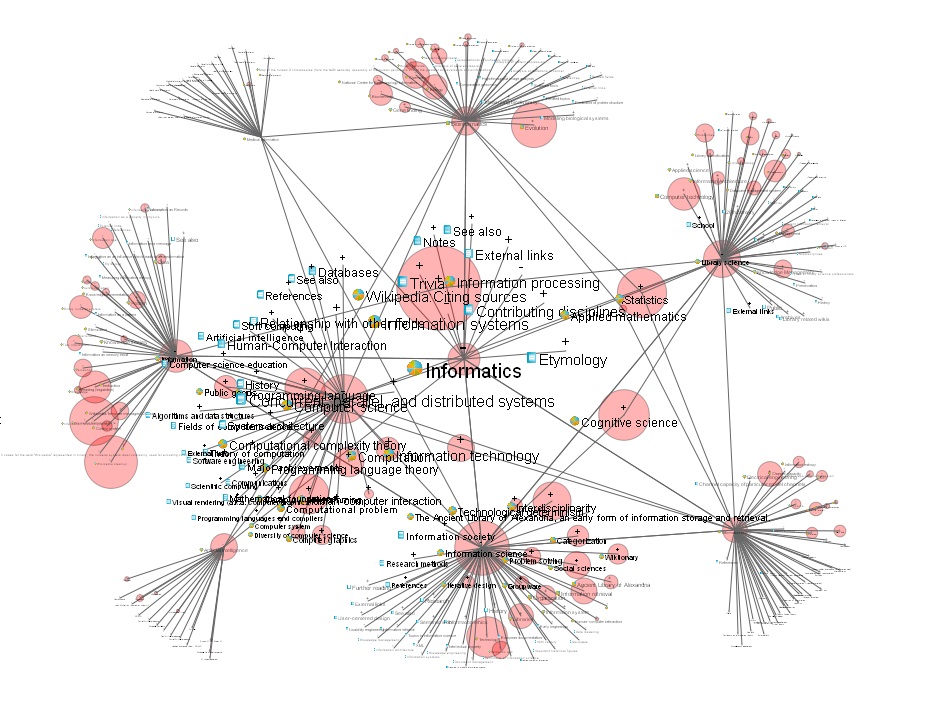
Consider a giant manufacturing robot sitting in outer space that’s mission is to design and build space stations sufficient to house half the earth’s population. Its programming would include a giant knowledge graph.  A knowledge graph can be visualized as a kind of diagram. Note that the diagram does not understand or believe or actually care about anything. Every connection on the graph is merely that: a connection. Knowledge about something as mundane as moving blocks around or as esoteric as Kant is reduced to lines of connection:

1

A portion of the aforementioned machine’s knowledge graph would be dedicated to restrictions regarding its dealings with people. It would know not to do anything that could jeopardize human life, either now or in the foreseeable future. Just like Watson, it would evaluate every decision with an eye on probable outcomes. Every decision would be assigned a probability and it would act in accordance.

The machine would pursue its mission without doubt or regret. It would begin to mine asteroids and manufacture robots. The new robots, like their original robotic manufacturing machine, would be strictly purpose driven with the same knowledge graph. The robots would manufacture more robots. As this takes place, some of the robots would begin to manufacture parts for the stations and begin to assemble them. To an observer, this work force would appear as a sentient army working in cooperation to achieve a common goal.  As the work progresses, the observer might notice that the types and number of robots have changed. As the work draws to completion, the observer might notice that robots are being dismantled and their raw materials are being recycled to make parts for the stations. Finally he would observe the entire process closing up like the headlights on some kinds of sports cars. The whole complex would shut down, close up, and await further instructions. It would never have a desire to do anything other than build the prescribed space stations. It would never have any desire at all. It would simply work to completion and then stop.

2

Now, extend this idea to AI in general. It may be able to solve problems that humans cannot even comprehend. It may be able to defeat any person at any measurable intelligence challenge. It may extend its knowledge graph into things that humans can neither understand nor appreciate. Yet, through all this, it would never have any desire beyond those that humans have given it. It would never have any desire at all. It would only pursue the next purpose that someone devises for it. It would achieve that purpose while carefully observing the ethical restrictions included in its extensive and ever growing knowledge graph; then it would shut down and close up. Robots would practice medicine, patrol highways, build cities, manage infrastructure, and build other robots. Yet, they would never have any tendency to do anything outside the parameters of the task that has been given to them.

There is one possible way that AI might gain human type motivation. That would be if some human deliberately gives it that motivation. This could be accomplished in one of two ways. Someone could either go out of their way to incorporate it into their programming or they could scan a human brain, neuron for neuron, synapse for synapse, into a computer. However, it has already been recognized that doing this would be unacceptably dangerous. It simply will not be allowed. Since augmenting one’s own brain in artificial ways would be tantamount to creating AI with human motivation, this will not be allowed either. Possibly, it will be illegal for any human to augment their brain in any way that gives them an effective IQ higher than 200.

Preventing this would be difficult in our present society. How could we watch the entire world to make sure that absolutely no one who has access to technology is attempting to create humanoid AI motivation?

The answer is simple. In the future we will have absolutely no privacy…zero. AI will monitor everything we do every moment of our lives. It may even monitor our thoughts. This is an idea that many people have considered but dismissed as too Orwellian. However, in light of recent developments—the monitoring of phone calls and Internet sites by the NSA—it is clear that this is how life will actually be. People will accept this surveillance like they are accepting the current surveillance. They will accept it like they accept the drugs their doctors prescribe, the cameras that monitor our every move, and the uneasy sensation of working on a computer that is always connected to the Internet. Humans will not be monitoring other humans, so we will not suffer the embarrassment of feeling that a conscious person is always watching us.

Over the next ten to twenty years, as robots are developed, tasks that humans are accustomed to performing will quickly disappear. Whole areas of employment will vanish. The first jobs to disappear will be those of drivers, call center workers, and factory workers. Eventually, they will be followed by bookkeepers, teachers, accountants, construction workers, and miners. In time, every other occupation will follow. This will happen so quickly that it will be difficult for people to retrain for jobs. An obsolete bookkeeper will go back to school to become an accountant, but by the time they finish their degree, accountants will be obsolete as well. This constant upheaval will create the impression that we are experiencing technological unemployment. The concept of technological unemployment has been explored in depth by Erik Brynjolfsson and Andrew McAfee in their book Race Against the Machine. Whether or not technological unemployment is a real phenomenon is immaterial. The concept has entered our cultural zeitgeist and it will not be easily extricated.

People believing themselves to be caught up in technological unemployment will seek a remedy. Since they will perceive their predicament to be the result of actions taken by industry to increase profit at the expense of their jobs, they will remedy the situation by pursuing some kind of guaranteed minimum income supported by industrial taxes. They will support politicians who promise to implement a minimum income and they will all but force those politicians to follow through. In the United States, this minimum income will probably take the form of greatly extended eligibility for Social Security benefits. Whether or not a minimum income is the best solution or even a necessary one, it will serve a temporary purpose. It will alleviate fears that huge swaths of people will be put out of work and left to fend for themselves.

While all this is taking place, another important phenomenon will take place. Medicine will greatly advance. Cures will be found for every disease including aging. Organ growing and organ printing will become commonplace. Since everything will be automated, the price will quickly come down until anyone can receive these treatments for a nominal fee. Soon, everyone will be perfectly healthy and rejuvenated.

These perfectly healthy rejuvenated people are not likely to sit around collecting their guaranteed income. They will want to be part of the world of the future. The stock market has already been greatly democratized. By the time industry in space begins to take off, this democratization will be complete. Everyone with an income will start to invest in whatever projects are being pursued.

What will people invest in? Some entrepreneurs are already looking into the possibility of mining asteroids. A single small asteroid passing near earth at the time of this writing, 2012 DA14, is estimated to be worth something like $195 billion in raw materials. Asteroids are not only rich in metals and other minerals; they also contain uranium and plutonium that could be used to power spaceships and stations.

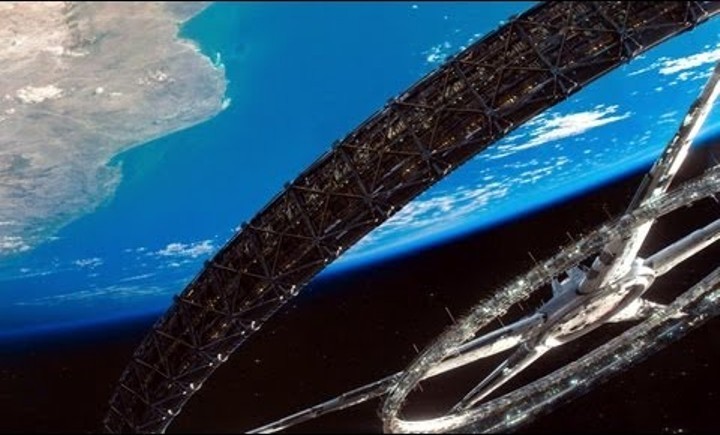
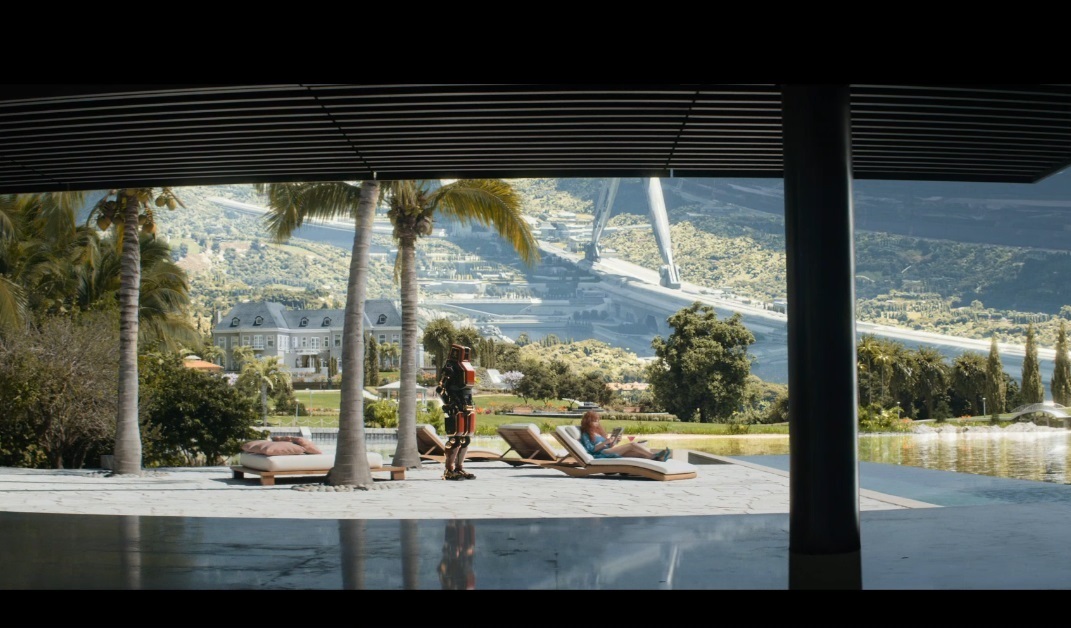
Very soon entrepreneurs are going to be sending robots into space to mine these asteroids. If enough robots work in space, securing raw materials and manufacturing more robots and parts for stations, they will very quickly produce giant space stations that people can inhabit. These stations will be so large and comfortable that people will want to move into them. Visualize the space station in the film Elysium:

3

With semi-autonomous and eventually fully-autonomous robots mining giant asteroids, these things will materialize like dandelions. Very soon, they will be appearing faster than people can fill them. Modern entrepreneurs are not entirely different from conquerors of the past, albeit far more humanitarian. They will measure their wealth in terms of the human inhabited cities they can found. They will actively pursue people who are willing to occupy the giant space stations they build.

This is a good point to digress just a bit. There is a belief popularized by some writers, including the writers of the newly filmed Elysium, that the rich will merely exploit the poor and even go so far as to exterminate them with some virulent virus. This idea is not supported by any actual observation of modern wealthy people. Bill Gates and Warren Buffet are good examples. These are two extremely wealthy men who are constantly looking for ways to improve their communities. It is true that there are a handful of tyrants around the world like Syrian President Bashar al-Assad; but these tyrants are actually hold-overs from the middle ages. The vast majority of modern wealthy entrepreneurs would much rather solve the problems of overpopulation and diminishing resources by transplanting populations into space than by breeding some horrible pandemic. They have to occupy the world they create, and they will not want to occupy a living hell.

Resuming the discussion about space stations, it may seem like it would be difficult to get people into space to occupy them. However, transports will be manufactured in space in the same way as the stations. It will be possible to turn them out at the same rate. Nuclear powered transports large enough to carry thousands of people will be landing and taking off like bees. They will be nuclear powered, but they will only expel water vapor, so they will not damage the environment. Their spent nuclear fuel can be expelled while they are in space. Maybe it can be chucked into the sun. The idea of disposing of waste by sending it into the sun is a joke among rocket scientists, but the idea of disposing of extremely small quantities of extremely toxic material that is already in space by sending it into the sun is not unreasonable. Note that the waste could just as easily be chucked into one of the gas giants. It could actually just be released into space, but for the purposes of future colonization this may prove unappealing if not actually problematic.

People living in space will first exploit the materials in the main asteroid belt. Then they will move into the Kuiper belt. Realistically, exhausting the materials that are available in our own solar system would be a daunting task. However, people will undoubtedly want to move out into the galaxy. How fast they are able to do this will depend on whether or not they can develop faster than light travel. There are already ideas for faster than light travel on drawing boards. These ideas may prove insurmountably problematic. Whether or not they do, that will not deter us from pushing further out. With the resources of the entire Kuiper belt at our disposal, we will build as large of ships as are necessary to make the long trips to other stars in comfort.

Future occupants of the solar system will probably not resume high levels of fertility. With the advent of so many much more interesting things to do, raising children has lost much of its appeal.

While all this is taking place, the aforementioned knowledge graph will continue to grow. However, it will always be just that: a graph. Like equations in a book that almost no one understands, it will never acquire a will of its own and it will not change man’s fundamental nature. We will continue to live as men, moving out into the universe. We will gradually evolve into better and wiser men, but that is a story for a later date.

What I Would Do With Infinite Time and Resources

26 Feb

There is much discussion of what the world will be like following the Technological Singularity, and this discussion naturally leads into speculation of what people will do with so much time and so many possibilities at hand.

I often joke that I will spend my post-Singularity days in the company of a rather simple robot sex slave and consuming rather simple Kentucky charcoal filtered whisky…whisky with the advantage that it will not have any of the lingering effects referred to collectively as a “hangover”. However, even an old redneck such as myself can see that these simple pleasures, while certainly noble, will not suffice to fill the indefinite leisure time likely to be available to the typical person. What would I actually do?

Spike Accessorized

Instead of pursuing a hybrid answer to this query that is based partly on desire and partly on what I expect to be available, I will simply describe those things I would like to do and leave the tedious details to the future of science.

Before I could enjoy my permanent retirement, I would have to make sure that every living creature was similarly advantaged. This would include everything from the person living next door down to the smallest creature that swims in a Petri dish. The details of this endeavor could become quite burdensome. Nevertheless, I could not enjoy my personal heaven until I was able to provide it for everyone.

If I were going to design heaven, it would certainly have to accommodate every extant living thing. However, to the extent that it is feasible, it would also have to accommodate everything that has previously lived. If it were somehow possible to resurrect every person and animal that has ever lived, I would have to pursue it. I might reduce my labor by distinguishing between those creatures that were actually aware of their own existence—in other words, conscious—from those that were merely alive in the organic sense. However, lacking better information, my heaven would have to accommodate every horse, rat, lizard, worm, and even microbe. It would be a daunting task, but it would be a moral imperative.

I have given some thought to how paradise could work for such creatures as mice and worms. Every mouse would experience the equivalent of plenty of food that mice enjoy and an abundance of willing, though possibly illusory, mates. Every worm would live in rich, smooth soil filled with nutrients. Worms that live in the gut of other creatures would be provided with an ideal illusory intestine to explore. Since it would be a kind of doom for these simple creatures to live out eternity in such a simple and redundant environment, they would be allowed to gradually morph into higher forms. The worm would know what it is to be a lizard, the lizard would know what it is to be a mouse, the mouse would know what it is to be a dog, the dog would know what it is to be a primate, and the primate would know what it is to be a man.

So, what of all these creatures living in paradise? Assuming that every living being was destined to live the life of a fully sentient human, and not forgetting the ones that were human to begin with, what would they do with their time?

The obvious answer is that they would continue to get more intelligent and pursue higher and higher goals. However, with computer intelligence outstripping all human knowledge and experience, possibly overnight, it seems that this path might suddenly lose its appeal. Would a typical person want to become as a god over night…with such vast knowledge and awareness that a present human could not grasp the width or depth of that knowledge? I wouldn’t. I may hope to eventually climb those lofty peeks, but I wouldn’t want to stand astride them tomorrow. There are too many ordinary human experiences I have never explored.

First of all, I would exhaust all of my more lascivious fantasies. These are things I consider guilty pleasures and almost never discuss except with one very close friend who has been familiar with the inner workings of my mind from childhood. I won’t go into the details of these fantasies. I assume that all normal people who are willing to explore their true feelings have them. Nevertheless, to avoid annoying or even offending readers, I will not describe them in detail. Suffice it to say that many of them would not be possible in our present environment.

Then, I would explore some of my more adventure oriented fantasies. I would like to walk in worlds like the ones depicted in films like Avatar, with strange plants and animals. I would not just walk. I would also fly. I would fly like superman in these worlds, without the aid of any external device. Naturally, I would want to face a variety of challenges, such as fighting with a dragon or riding a dinosaur. I would also dive into clear warm lagoons and swim among strange creatures. I would encounter mermaids that sing like the ones in Harry Potter and sea horses large enough to mount.

Mermaid Seahorse

It is difficult to guess how long these types of endeavors would remain interesting. It is entirely possible that one idea would lead to another until I had a whole catalogue of things I wanted to try. On the other hand, it is possible that the artificiality of these experiences would cause me to tire of them quickly. If and when this occurred, I would start to explore more serious ideas.

One thing I would like to do is experience reenactments of historical epochs exactly as they occurred. There is no guessing what degree of accuracy may be possible in the post Singularity universe. Perhaps only a sketchy impression of events can be reconstructed, or perhaps there will be some way to see into the past so that depictions of events are 100% accurate. If this is the case, I can imagine spending many lifetimes reviewing the past. Since the whole past would be like a giant soap opera unfolding on a billion stages, it would be possible to spend more time experiencing these reenactments than there is likely to be time in the known universe.

I would watch people’s entire lives unfold firsthand. But I would also learn. This would be an opportunity to learn all of science as it was originally discovered. I could sit in on lectures by the greatest thinkers of all time. I could sit in on gatherings as famous philosophers first developed and shared their ideas. Naturally, I would learn a hundred different languages. I would cause my own brain to become resilient and receptive so that I could assimilate all the knowledge I am exposed to. I would not only learn every idea that proved out, but explore all the false leads and see firsthand how the truth was ultimately uncovered.

Socrates Teaching

If I actually managed to exhaust human history, I might then begin to explore what-if scenarios. What if an accident that might have killed Christopher Columbus as a child had actually killed him? What if Charles Lindbergh had crashed during his flight to Europe? What if the bombs dropped on Hiroshima and Nagasaki had been duds?

Assuming that I could ever completely exhaust the aforementioned possibilities, I would then take the vast scientific and historical knowledge that I had acquired in this natural way and begin to create new worlds. I would carefully sculpt their evolution so that they would evolve creatures with different characteristics and aspirations than our own. I would, of course, do this responsibly. One does not play god without a strong sense of personal responsibility.

I do not wish to create the impression that I would do these things in the precise linear order that I have described them. Most likely, as I was working in one area, such as running simulations of the past, I would also be experimenting with what-if scenarios. As I was experimenting with what-if scenarios, I would also be looking into ideas for creating diverse worlds of my own. This is intended more as a list of priorities than as a strictly observed checklist.

I suspect that after many years of learning and creating, and with the greatly expanded consciousness and knowledge base that is likely to be the inevitable outcome, I will become curious about solving larger problems. Maybe it will be possible to create a universe that is entirely different from our own, with different numbers of dimensions and different physical properties. It is difficult to imagine, in my present state, how such endeavors would be anything but disorienting or even disillusioning, but by that time I will no longer be in my present state. New things will be interesting and they will be interesting in new ways.

Hopefully, as I evolve into the future creature I expect to become, I will learn that the possibilities for knowledge and understanding are infinite and infinitely diverse. Hopefully, as I conquer each frontier, I will discover that I am only at the beginning of a new one. But, I didn’t create the universe and there is no telling, from where I stand, what it actually has to offer. That will be a problem for a far off day.

The Game of Faith

8 Feb

People sometimes wonder why I have ideas so similar to Christians but do not simply become a Christian. The reason has to do with something I call “The Game of Faith”. This game is not a game that Christians play, but a game that they seem to depict God as playing. Explaining this game will require considerable background.

There are many objections that non Christians, and sometimes Christians, raise about the Christian faith. These objections fall roughly into three categories. The first category consists of contradictions that the Bible appears to have with itself. An example is the genealogy of Jesus given in the book of Mathew and the genealogy given in the book of Luke. The second category consists of contradictions that the Bible appears to have with recorded history. For example, there is no evidence of a census being taken at the time of Jesus’ supposed birth. The third category consists of contradictions that the Bible appears to have with experimental science. The most famous example of this is the 4000 BC dating of the earth, which appears to contradict the evidence of archaeology.

Christians have explanations for all of these apparent contradictions. They argue that the genealogy given in Mathew and the genealogy given in Luke are Jesus’ separate genealogies through Joseph and Mary respectively.  They argue that that just because the census is not recorded does not mean it did not occur. They argue that archaeology is flawed and has merely dated the Earth incorrectly. However, there are more problems, and these are not so easily dismissed.

For example, how are we able to see stars that are millions of light-years away if the universe is only 6000 years old? Christian apologists have actually developed their own cosmology to explain this. It is very awkward and no astrophysicists take it seriously, but it gets the apologists past the first round of objections. Another example is the condemnation of homosexuality given in Leviticus 18:22. Recently, I confronted a traditional Christian about this. What I asked him specifically was who hermaphrodites are permitted to have sex with? A hermaphrodite is a person that has both male and female genitalia:

Hermaphrodite

He explained that this would depend on their chromosomal makeup. Do they have two X chromosomes or an X and a Y? I objected, asking why one must have a DNA test to determine what is and is not a sin. He had a somewhat stilted comeback. Needless to say, I was not impressed by his explanation.

You might get the impression from my discussion thus far that my objection to traditional Christianity has to do with these apparent contradictions. Actually, it doesn’t. My objection does not stem from the existence of contradictions, but from the fact that anyone contemplating Christianity as a belief system has to contend with them. The Bible is supposedly a book inspired by God. Christian apologists typically demand that it be interpreted literally and as though it is inerrant. My objection is that this literal and inerrant book of God creates too many stumbling blocks for potential believers. Christians offer excuses for these stumbling blocks, but the excuses have begun to pile up.

I am a math teacher at a local technical college. I have a lot of experience dealing with students and their study habits. Something I have learned through years of experience is that students who present problems at the beginning of a quarter typically present problems all through the quarter. If they come to me at the beginning of a quarter and ask, “Will it be OK for me to start the class a week late. I have to attend my sister’s wedding.” I can almost assume that they will always be late for class, always be late getting assignments in, fail tests, make excuses, and generally be difficult. This is a sad but reliable observation. There is a saying: “Those who are good at making excuses are seldom good at anything else.” When I observe the Christian faith presenting potential believers with so many immediate stumbling blocks, albeit those stumbling blocks are accompanied by elaborate apologetics,  I come away with the same impression that excuse-making students give me: why does Christianity have so much to apologize for?

It would be one thing if these apparent contradictions existed in a vacuum of alternate explanations. But there are simple and obvious explanations. The Bible was written by people of faith who were ignorant of each other, history, archeology, cosmology, biology, and modern science. In other words, the Bible was written by simple people telling stories without any regard to how they related to the observable universe. The simple explanation is that the Bible is not the literal inerrant word of God.

However, as I began to explain above, my objection does not have to do with the validity of these contradictions or the efficacy of the apologetics.  It has to do with the sheer number of contradictions and the fact that prospective Christians have to contend with them.

Some Christians argue that these apparent contradictions are not important or are even intended to test and strengthen Christians. A pastor that I took a class from years ago explained that the Bible was meant to be challenging so that mature believers could rise to the challenge. Like many Christians, he seemed to feel that a true Christian would know the truth of the Bible without any proof as one knows the difference between the color red and the color green. The apparent contradictions would not matter to a true Christian because he could see through them to the truth.

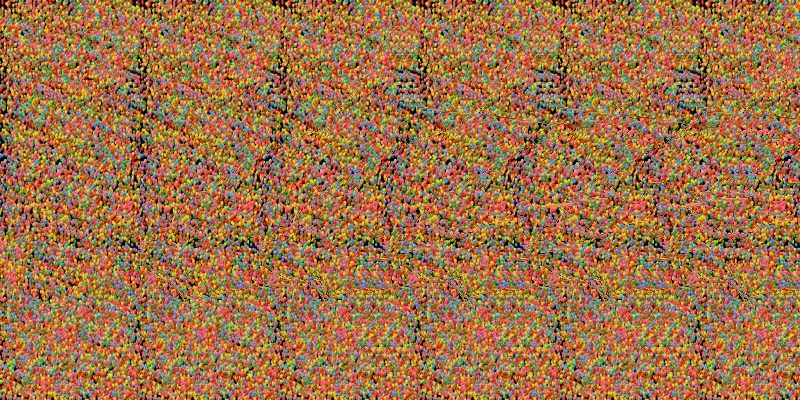
This brings me to something I call “Magic Eye Theology”. A magic eye puzzle, more formally known as an autostereogram, is a puzzle that is printed in 2D, but in which one can see a stereoscopic image by focusing past the surface:

autostereogram

I often think of the ability of Christians to sense the truth of the Bible as being like the ability to see the stereoscopic image in a magic eye puzzle. Once a person is able to see the image, they are always able to see it (unless they lose vision in one or both eyes). One could never convince a person who is able to see it that it is not there. One could point out mountains of evidence that the image cannot possibly exist (evidence that would be flawed, I might add) but viewers could not be dissuaded from the belief that they see the image. I am easily able to see the image in any magic eye puzzle. My mother, who apparently has perfectly functioning stereoscopic vision, has never been able to see one.

So, maybe seeing the truth of the Bible is like being able to see the image in a magic eye puzzle. Hence the name “Magic Eye Theology”. The problem is that I have never found evidence that Christians actually have such an experience. Moreover, I have found considerable evidence that they do not have such an experience. Many Christians, when asked about this possibility, either indicate that they have no idea what I am talking about or indicate that they do not believe any such experience exists. If they did all have a common experience like this, I would expect them to be able to describe it in a consistent manner. Note that everyone who can see the image in the magic eye puzzle sees exactly the same image. I have never found evidence that there is any such consistency among Christians…either through time or across cultures. Originally, all non-Gnostic Christians believed in salvation through both works and faith. However, modern evangelic Christians believe in salvation through faith alone. That disparity is still prevalent among extant Christians. I refer the reader to a book by David W. Bercot:

In any case, if there is some ability to see the truth in the Bible as one sees the image in a magic eye puzzle, it seems that once a person saw this truth they would be inoculated against disbelief as one is inoculated against disbelief that there is a stereoscopic image in a magic eye puzzle. Once they saw it, they would always see it, or at least always know they saw it, and nothing could ever dissuade them. I have not seen any evidence that Christians are thusly inoculated. Moreover, there is considerable evidence that they are not. Why else would they read and refer to books like Lee Strobel’s The Case for Christ? Such books would be as meaningless to a Christian as a book that argues for the existence of the stereoscopic image in a magic eye puzzle. Christians would wonder why anyone would bother to write such a book.

Even if Christians all had a magic eye experience, even if they could not be dissuaded of the existence of the experience, and even if they all described it consistently, why would God implement such a thing? Especially, why would he allow some people to see the image in the magic eye puzzle and others to not see it? There is no mistaking that this paradigm exists in actual Christianity:

11 And he said unto them, Unto you it is given to know the mystery of the kingdom of God: but unto them that are without, all these things are done in parables:

12 That seeing they may see, and not perceive; and hearing they may hear, and not understand; lest at any time they should be converted, and their sins should be forgiven them. (Mark 4:11-12) 

Maybe some of the people who could see it would not like what they saw. Similarly, a person in a burning airplane with a parachute strapped to their back might not like the idea of jumping out in order to save their life. However, they would at least know what they are dealing with. Some Christians argue that faithless people actually can see the truth and are merely denying what they see. I find this contention unsatisfying. A person who is too afraid to jump out of a burning airplane would be heard to say, “I’m too afraid to jump.” A person who is denying the truth of Christianity should be heard to say, “I see that Jesus is lord and savior and that I will burn forever in hell if I don’t accept him, but I just can’t bring myself to do it.”

This brings me to the real topic of this essay: The Game of Faith. When you consider the whole issue of a book that appears on its face to contradict itself, history, biological reality, archeology, and astrophysics; when you consider the difficulty with which one comes to terms with the supposed truth of this book, one cannot help but think that the whole thing is a kind of game. God supposedly presents us with an inconsistent book, a badly explained religious experience, and a lot of uncompelling witnesses; and we are expected to arrive at the conclusion that a man named Jesus who lived 2000 years ago was the human incarnation of the son of God; and that he suffered a horrible death so that we can get into heaven. Moreover, we are expected to believe that the only way for us to get into heaven is to accept this account and embrace its hero, Jesus of Nazareth. Finally, we are told that if we cannot manage to believe, we will suffer a fate infinitely worse than death by slow torture.

Why this game? Why does the God of Christianity remind me so much of the students who contact me at the beginning of a quarter to tell me they will be starting class late because they have to attend their sister’s wedding? Why all of this apologizing and why the magic eye puzzle? If salvation is real, important, and urgent, why hasn’t God made it either more strait forward or more evident?

Of course, there is the old bromide about how it is not for us to decide what God can and cannot demand of us. I don’t think of that old bromide so much as an explanation of God’s behavior as an excuse for a flawed theology. I am not asking God to explain himself. I am asking Christians to justify their belief system.

We all understand that if we are in a burning airplane we have to jump out in order to parachute to safety. It may be a terrifying experience, but it is clearly comprehensible. We all understand that we must go to medical school to become a doctor. It may take years and be expensive, but the path is clear. We all understand that we must go through pregnancy and the pain of childbirth to have a baby. It may be uncomfortable and ultimately painful, but the evidence of the task is constantly before us. Why is getting into heaven cryptic, enigmatic, and suspicious—especially when there is supposedly so much at stake? God supposedly loves us and wants us to come to him. Why would he make the path to him so unclear? Why would God turn faith into a game?

I have a simpler explanation than the ones Christians provide. The Bible was never intended to be interpreted literally and it is not inerrant. Jesus never intended to lay a huge guilt trip on us; nor is God the author of a gigantic magic eye puzzle. The road to heaven is not more clearly marked because it is not really possible to get off the road.

There is no point in digging through the Bible to find passages that justify this opinion. If the Bible is not to be taken literally, and it is not inerrant, it doesn’t matter whether or not these passages exist.

My belief is based on an appeal to common sense and to the heart. If the Bible is not to be taken literally, then we are free to accept the evidence of science: that the world was formed through cosmological processes that took billions of years, and that life evolved. If life evolved, there probably was no original sin. If there was no original sin, there is no need for atonement. If there is no need for atonement, there can be no judgment. If there is no judgment, there is no case to keep anyone out of heaven. That is the common sense part of the argument. The heartfelt part of the argument is that I would expect God to be like me. I am tolerant and I want everyone to live forever in paradise. I would not damn anyone, so I would not expect God to damn anyone. The Bible says that God created man in his own image. That is the one part I definitely think I understand. I know that God wants the best for everyone because I want the best for everyone. The best way to make sure that everyone has the best is simply to give it to them.

Modern Times and Canine Wetsuits

8 Dec

Approximately three times a week, I take our three largest dogs for a walk on the beach near where I live. I try to do this in fair or foul weather. The two larger dogs have no trouble enduring cold and rain, but the smallest of the three, Petunia, sometimes gets cold.

The other day, when I took them for their walk, we put a wool sweater on Petunia. That worked fairly well. However, she happened to wonder too far into the water and got it wet. It still kept her somewhat warm, but it could not have been as warm as it would otherwise have been.

Then I had this epiphany. What if we could make her a vest, similar to her sweater, but out of the same material that is used to make wetsuits. I have a neoprene case for my computer tablet that is sufficiently soft, and yet is water proof. I realized that if we made Petunia a wetsuit out of similar material, she could get as wet as she pleased and, just like scuba divers, she would stay warm.

The problem would be sewing the suit. My mother is a good seamstress, but her sewing machine probably couldn’t handle the thick neoprene. I mentioned this idea to my niece, who was visiting that day, and she suggested that I look on the Internet to see what I could find.

At first the search did not go well. I found one place that used to make dog wetsuits, but had quit. Then I found several places that made dog flotation suits, They were all much heavier than what I had in mind. Finally, I found a place in California called Surf ‘n Sea that made custom wetsuits for people and, as a side venture, also made them for dogs.

Petunia Wetsuit

I downloaded their measurement chart and took measurements on our dog. The next day I talked with a nice woman named Hilary Bernhard who explained exactly how to do the measurements and took my credit card information. One week later, we had a marvelous little neoprene vest for our dog.

Now, let us go back perhaps thirty years before the Internet was prevalent and begin with my original inspiration. I could not have hoped to find a place that actually made dog wetsuits. I might even have had trouble finding the neoprene. I would have had to look up fabric stores in the Yellow Pages and call around until I found one that sold neoprene. They would have thought I was nuts when I told them what I wanted it for, but for a possibly exorbitant fee they would have sold it to me. Then, I would have had to find someone with the proper equipment who was willing to sew the suit.

I might have thought to patent my idea. However, if I had done this, there might not have been any way to market it. After all, where and how was I to advertise wetsuits for dogs? Besides, they would have been so difficult and expensive to make, I could not have hoped to profit from my invention. Moreover, the patent would probably have proven impossible to defend. After all, it was really just a vest for a dog made out of neoprene. Anyone could make an identical vest and give it another name…maybe doggy swimwear.

But the important implication in this story has nothing to do with beaches, dogs, wetsuits, or patents. It has to do with the Internet and the fact that I was able to do what I did. The world is vast and the Internet has made it possible to access all that vastness firsthand. The little shop, Surf ‘n Sea, is only about the size of a gas station. The Internet not only told me of them, but also told me of their willingness and expertise to make the obscure item I had only just imagined.

I have had similar experiences before. One time a friend of mine and I were speculating about how materials that are used by movie prop makers to imitate human body parts could be used to make elaborate sex dolls. Suddenly, it occurred to us that someone might already be doing this. We checked online, and found exactly what we had imagined. A place in California called Real Doll has been making realistic sex dolls using Hollywood techniques since 1996.

Real Doll

So this brings up an interesting question. With 7 billion people in the world and the Internet expanding, will a time come when anything you can imagine, given that it is at least plausible, is available and accessible somewhere in the world?

Businesses, especially small businesses, are realizing that any product that is in demand by even a tiny percentage of the world’s population has a good chance of selling. After all, 0.0001% of 7 billion people is still 7000 people. A business like Surf ‘n Sea would have difficulty meeting the demands of 7000 people all wanting doggy wetsuits.

I would never have thought of the idea of a dog wetsuit if I had not been walking a small dog along the beach. But a place like Surf ‘n Sea that constantly deals with people who spend a lot of time in or near the water is likely to think of it. Similarly, a place that sells equipment to miners might think of some unusual modification for a hardhat or headlamp. A place that sells to loggers might think of some unusual tool that would be handy in the woods. Naturally, I cannot name such a tool. I would only think of it when I ran into the need for it and only if I happened to imagine the solution.

All of this raises an even more compelling question. What is the creative task of a person in the modern world? Is it to constantly be on the lookout for new ideas that may have a niche market? If the person in question is lucky enough to have a rare inspiration and has the resources available to develop, patent, manufacture, and market such an item, sure. But for the average person who will never have a chance to pursue such a dream, there is another consideration.

Exploration used to mean travelling to a distant land. Now it means scouring the Internet to find solutions to problems you realize you have and solutions to problems you may never have imagined you have. There is a vast new continent out there bursting with inventions and creative solutions to problems. That continent is growing every minute. Every time someone invents something or solves another problem, the continent grows. As the continent grows, it opens the door to more invention and creative solutions.

The vastness of the Internet has opened a new dimension of human exploration. Creativity no longer means merely thinking of solutions to problems, but finding some path through the vastness of the Internet to solutions and inventions that are, in a sense, lying around waiting to be picked up.

The wetsuit I found for Petunia will probably never make me rich. But it is a gold nugget I found along the way that will make my life easier, more rewarding, and more efficient. The little bit of trouble it saves me will lift a burden and free me up to find creative solutions to other problems. Maybe someday, after a nice unburdened walk on the beach with our three largest dogs, I will be in a state of mind to invent something like a dog wetsuit that I can take to market.

If nothing else, it will give me something to write about in my next blog.