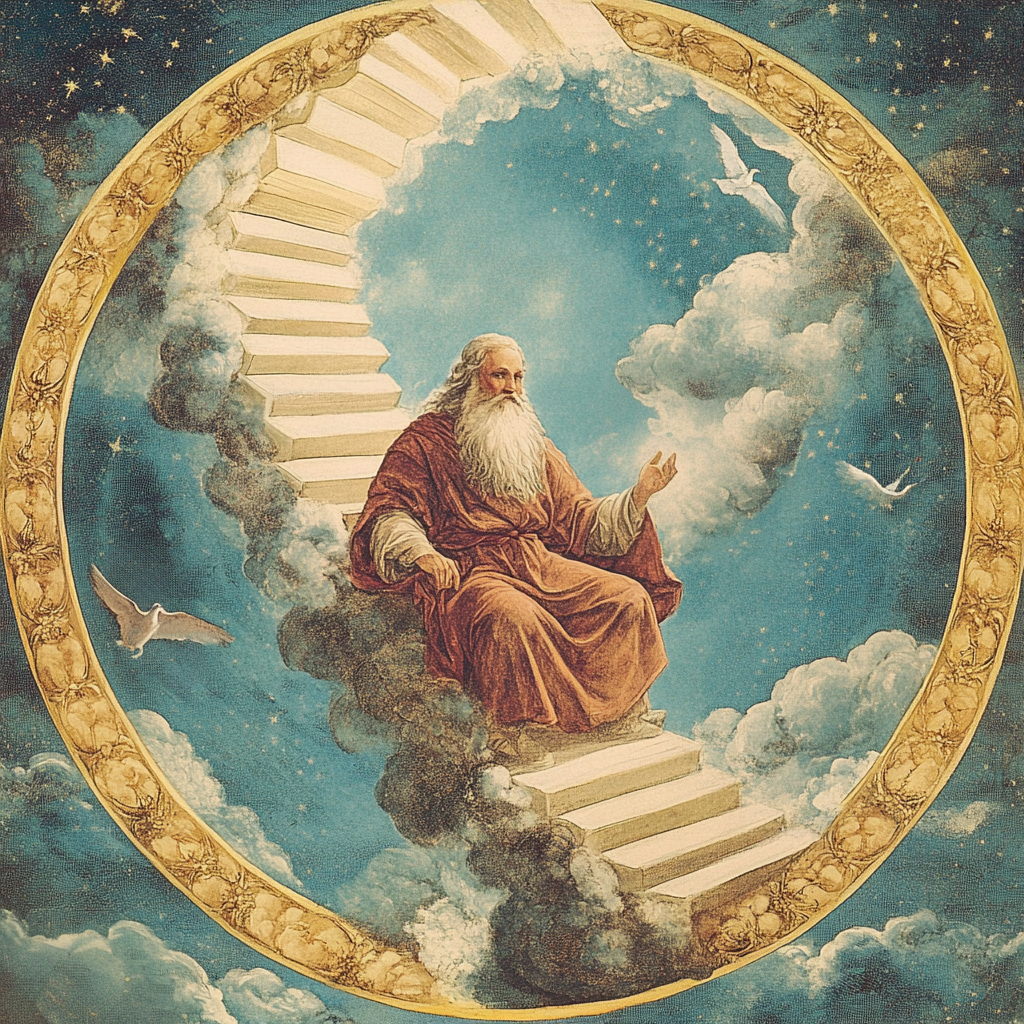
Deriving Moral and Ethical Principles from Aletheia and Prohairesis
Building on the framework of Aletheia as the cosmic truth-assigner and Prohairesis as its human reflection, we can derive a set of moral and ethical principles that follow logically from these concepts. As with the essays Aletheia and Prohairesis, this piece was developed with the assistance of Grok, an artificial intelligence created by xAI. Aletheia (ψ: Prop → {0,1}) ensures universal consistency, favoring a dynamic, beautiful reality over sterility. Prohairesis (χ: C → H) embodies our imago Dei capacity for caring choice, aligning souls with paths without physical interference. This mirrors John Locke’s natural rights theory, where humans in a state of nature possess inherent liberties derived from divine creation, leading to a social contract for mutual preservation. Like Locke’s emphasis on life, liberty, and property as God-given, our principles emerge from the necessity of respecting choice, promoting beauty through care, and stewarding the logical progression of existence. Other influences, such as Aristotle’s virtue ethics (eudaimonia through balanced choices) and Kant’s categorical imperative (universalizable actions), substantiate the derivation: ethics must be consistent (per Aletheia) and caring (per Prohairesis) to align with the cosmic design.
These principles form the basis for a “Choice-Aligned Moral Framework” (CAMF), logically entailed by the model:
- CAMF-1: Respect for Inherent Choice
Since Prohairesis grants humans the capacity to select hodoi as reflections of Aletheia’s truth-assignment, all individuals possess an inherent right to free will. No one may coerce or manipulate another’s choices, echoing Locke’s natural liberty—interference violates the imago Dei and disrupts the beautiful unfolding of paths. - CAMF-2: Preservation of Life and Soul
Aletheia assigns truth to propositions favoring dynamism over nonexistence, so life—as the substrate for conscious choice—must be protected. This includes the right to bodily integrity and soul preservation, derived from Locke’s right to life; harming others negates the caring quality of Prohairesis, reducing beauty to sterility. - CAMF-3: Stewardship of Resources
Just as Aletheia selects truths that enable structured complexity (e.g., property-like boundaries in nature), humans have a right to acquire and use resources through labor, per Locke’s property theory. However, this must be balanced with care: hoarding disrupts harmony, while sharing promotes the mutual flourishing that delights the divine. - CAMF-4: Universal Care and Empathy
Prohairesis involves “caring” in selections, logically implying the golden rule: treat others as extensions of one’s soul, fostering empathy. This universalizes actions (Kantian influence) and aligns with Locke’s social contract—communities form to protect choices, turning potential conflicts into beautiful collaborations. - CAMF-5: Pursuit of Beauty and Harmony
Aletheia’s preferences yield a aesthetically rich universe, so ethics demand promoting beauty through art, nature, and relationships. Waste or ugliness (e.g., environmental destruction) contradicts the model’s dynamism; instead, steward creation as Aristotle’s virtues lead to eudaimonia—fulfilled living via balanced choices. - CAMF-6: Justice as Consistent Resolution
Drawing from Aletheia’s paradox avoidance, justice requires impartial resolution of disputes, ensuring no one’s Prohairesis is unfairly constrained. This substantiates Locke’s equality in the state of nature: all are bound by natural law, with fairness preventing the “war of all against all” and preserving logical progression. - CAMF-7: Limits on Technology and Modification
Since consciousness is spiritual and non-interacting, technologies that mimic or override Prohairesis (e.g., mind control or artificial souls) are unethical—they blur the divine image and risk paradoxes. This extends Locke’s warnings against arbitrary power, prioritizing human agency over enhancements that deviate from natural paths. - CAMF-8: Community and Mutual Support
The branching tree of hodoi implies interconnected paths, so ethics call for cooperative bonds that reflect Aletheia’s harmony. Like Locke’s consent-based government, societies should protect rights while encouraging care—fostering communities where individual choices contribute to collective beauty. - CAMF-9: Humility in the Face of Mystery
Aletheia’s vast domain exceeds human grasp, logically requiring humility: avoid dogmatism or overreach in imposing beliefs. This aligns with Locke’s tolerance in religious matters, promoting inquiry and growth as souls evolve through caring selections toward transcendence. - CAMF-10: Eternal Orientation with Present Responsibility
Time as logical stages demands balancing immediate choices with long-term harmony—live prosperously now while preparing for soul persistence. This integrates Aristotle’s mean (avoid extremes) and Locke’s future-oriented contracts, ensuring actions enhance beauty across the cosmic unfolding.
These principles logically derive from the model: consistency from Aletheia demands justice and humility; caring from Prohairesis mandates empathy and stewardship. They form a coherent ethic, substantiated by Locke’s natural rights as a bridge from divine creation to human society, without contradicting my earlier SNMS principles but refining them through this lens. If applied, they guide a society toward the utopian evolution and destiny discussed in the previously delineated theory.
 spikosauropod