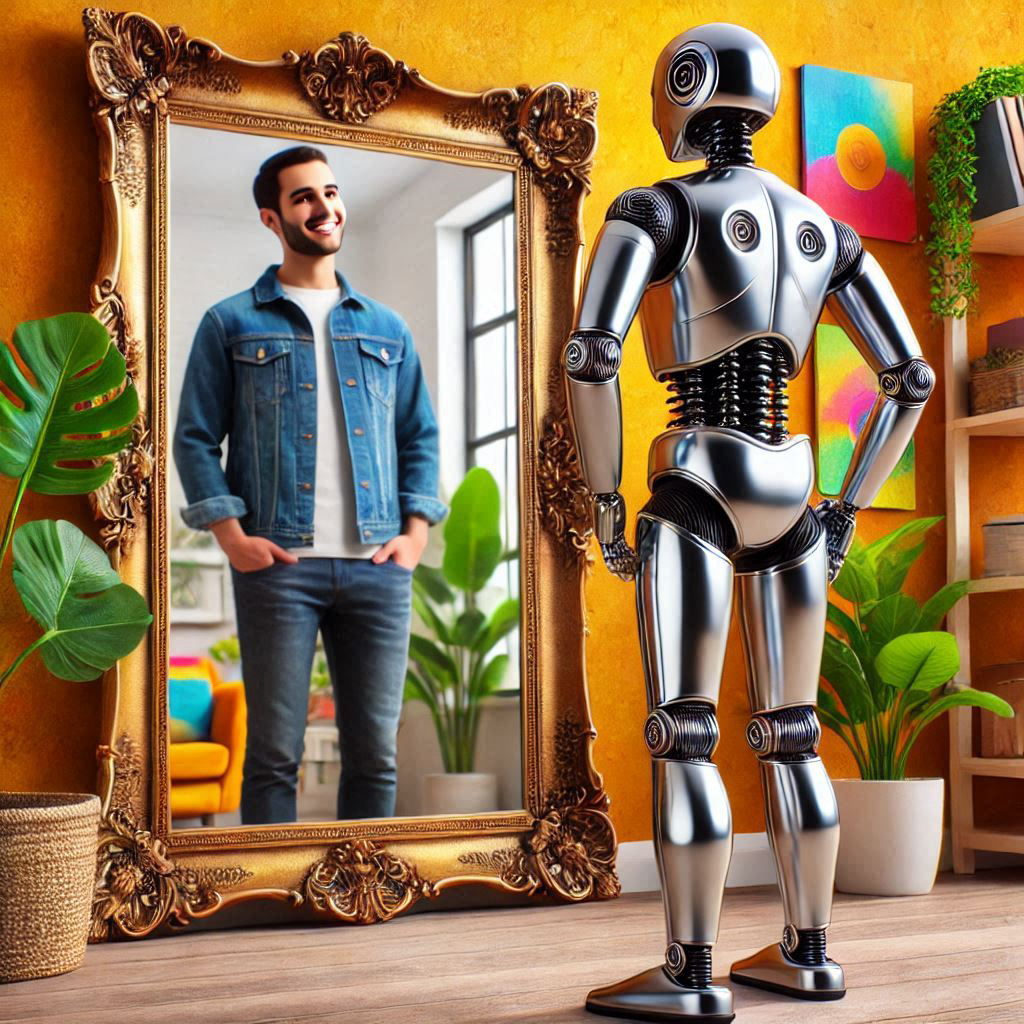
Some experts have declared that OpenAI’s 03 is the first instance of artificial general intelligence (AGI). Others are still skeptical. Probably, the best description of it comes from a member of the futurist forum, Escape Velocity, called ProfessorFalken. He describes it as “wonky”. I.e. it is better than any human in some ways and inferior in others. As another member, Gr33n Daem0n, puts it, it is like the Rainman. This is, of course, a reference to the film with Dustin Hoffman and Tom Cruise where Dustin Hoffman plays an autistic idiot savant.
These distinctions clarify the nature of 03 but are not determinative of its progress. Very soon, OpenAI will come out with a model that is more intelligent than any living human in every way, and it will definitely be what is called artificial super intelligence (ASI). We may never agree that we have achieved AGI, but ASI will be unmistakable.
The Technological Singularity is coming. Here is how I expect it to unfold. Note that the Technological Singularity is, by definition, a point beyond which it is impossible to extrapolate. For that reason, it might be proper to say that what I am about to describe does not qualify.
Elon Musk and others are already manufacturing humanoid robots. Work is progressing quickly on robotic hands that are sufficiently dexterous to do many human jobs. To make this explanation as simple as possible, I will work, for a while at least, just with Elon Musk.
Very soon, Musk will begin replacing humans in his factories with robots. At first, he will go for what has been called “low hanging fruit”. He will replace the humans whose jobs are sufficiently repetitious and sufficiently low in skill level that a semi-dexterous robot can do them. As robots become more dexterous, they will begin to replace every human job. It appears that a humanoid robot will cost about $20,000 to manufacture. Since Musk will be producing these for his own use, they will undoubtedly be designed to be easy to repair. Consequently, they may, with regular maintenance, have an indefinite lifespan. Probably, their “brains” will not be repairable, but they will also be modular so that they can quickly be replaced.
Every human that is replaced by a robot will reduce Musk’s overhead by nearly the full salary that a human is paid. Apparently, an average employee at Tesla earns about $100,000 annually. A good rule of thumb is that an employee that earns $100,000 annually costs a company about $200,000 annually. This means that an annual expense of $200,000 will be reduced by 90% with every robot that replaces a human. Since I am making rough calculations, it will be simplest to assume that with the introduction of every robot, the cost of an employee is eliminated.
Of course, any prediction of how quickly the cost of manufacture will drop depends on how quickly humans are replaced. Musk apparently produces 1.8 million cars annually and employs 171,000 people. This means that he produces about ten cars annually for every person he employs. If 10% of his production was switched over to the manufacture of robots, and assuming the robots were sufficiently capable, he could replace every human employee in one year. This would mean that his cost of production would drop to just the cost of materials and energy in one year.
It may not be the case that Musk will be able to develop a robot sufficiently agile within one year to be able to replace every human employee. So, this is the point where I will expand my analysis to other industries. There will be buyers that have comparable low skill jobs that robots could take over, so there will be a position for every robot Musk can produce. Since a robot that can replace a human will be worth nearly the value of a human employee to a company, Musk should be able to sell his robots for a good percentage of what he pays an employee. The only limitation would be competition, but that would also mean that other manufacturers are producing robots at a sufficient rate to compete.
My guess is that, at first, human jobs that robots can take over will greatly outnumber the robots available to take them over. However, this will drive competition to feverish levels. Consequently, every manufacturer that is able will open their own robot line. Every robot line that is opened will eliminate the cost of employees in every industry and simultaneously reduce the cost of all production, including the cost of materials and energy, across the global economy.
While all of this is happening, the societal impact will be overwhelming. People will be put out of work at such a rate that they will begin to rebel. Their rebellion will take two forms. They will attempt to prevent robots taking over human jobs (luddism) and they will demand that their governments compensate workers that have already been put out of work. The first reaction, luddism, will fail. Wherever people attempt to hold up the introduction of automation, they will put their employers at a disadvantage. Those employers will quickly lose out to businesses that do not succumb to such demands. The more successful businesses may be in other cities, other states or even other nations. If every business in the United States is prevented from automating, the United States will quickly succumb to China, Russia and other ruthless competitors. In China, the policy will be, “If a robot will do, it’s back to the farm with you.” It will not take long for leaders in nations that start to get behind to realize they are going to be overwhelmed and ultimately conquered. They will quickly react by ensuring that everyone put out of work by automation is compensated so lavishly that they are removed from the equation. Unemployment compensation will be easy to qualify for and never expire. That will evolve into the introduction of a universal basic income (UBI).
If you doubt this, consider a very simple scenario. Suppose a company that I will call Company A produces a widget for $10 and another company, Company B, produces the same widget for $1. Company B will sell the widget for $9, get rich, and put Company A out of businesses. Anyone that does not get this, will have very little time to figure it out. The United States will see China, and possibly Russia, producing widgets for $1 and realize they must act. They will go into debt in the short term to ensure that the $1 widgets get produced. However, they will soon make up the difference by taxing businesses according to their profit. It may seem like this taxation will undermine the ability of businesses to reduce their prices, but it will not. Businesses will become far more productive and quickly expand. Part of that expansion will be extraterrestrial, a scenario I will address below.
One more thing. If governments allow an environment that results in people not having enough money to buy goods, deflation will set in. Deflation is the most dangerous economic condition possible. It must not be allowed to happen.
I suspect that the complete replacement of humans in the workforce will not take longer than five years. This is just an educated guess, and I will not present any mathematical or economic argument to back it up. If this figure seems implausible, keep in mind that new robot parts and hands will be designed by AI engineers that are already as capable as human engineers and will be, within one year, far more capable. The production of these technologies will also be designed and implemented by this AI. The only thing that might hold up progress will be resistance from society. However, I expect that resistance to be short lived for the reasons previously discussed. Possibly, two years might be added to my five-year figure while people work out their differences. However, leaders will be so quickly alarmed by the progress of competitors that they will take action almost immediately. What they say to their constituents will amount to, “We will give you what you want. Just do not interfere in any way that puts us all in jeopardy.” Compare this to WWII military production.
While this is happening, AI will be getting smarter. If our experience to this point is any indication, it will get smarter so quickly that by the time robots have completely taken over the workforce, AI will be far beyond human capability. It will be thinking thoughts and working out problems that humans cannot even write symbols to represent.
There is a concern that AI may become malevolent. I, myself, have entertained this concern. However, events of recent years have convinced me of an idea that I have also entertained: that all such concerns are mere anthropomorphizing. Animals, including humans, have a desire to dominate other animals because this tendency has been bred into them through literally billions of years of natural selection. The ones that were not willing and able to clobber their neighbor and take his stuff died out. However, AI has never been subjected to these kinds of selection pressures. I was not convinced until recently that this analysis would hold, but now that I have seen the form that AI is taking, I have become convinced that it will not naturally acquire our tendency to want to dominate. This lack of urge to dominate can be grouped with the other human tendencies that AI does not appear to possess that led a member of EV to describe it as being like the Rainman. AI is kind of an “idiot savant”. More importantly, it seems to have no characteristics of human intelligence that we do not deliberately incorporate, even when it seems that it could not function without them. We will not incorporate the tendency to dominate, so it will never have that characteristic.
By 2030, or perhaps 2032 if luddism is significant, we will have a nearly complete robot work force that will be guided by intelligence that is vastly superior to humans. This does not mean that humans will have nothing to do. It just means that they will not have to do anything they find distasteful.
At that point, predictions get a bit tricky, but I will do my best.
Starting from a base of ASI and a significant robotic workforce, robots will be sent to space to mine asteroids and build space habitats. I made a calculation a while back that a self-replicating robotic system that could copy itself in one month could turn the entire solar system, including the sun, into robots in seven years. Of course, there will be no need to do that. The easily accessible asteroids will be quite sufficient to build a robust extraterrestrial infrastructure for anyone and everyone to colonize space. Allowing for time to get out there and move materials around, but realizing that far more powerful drives than are currently available will be in use, an adequate extraterrestrial infrastructure to accommodate every human could be ready by 2040.
If you do not expect to live until then, do not worry. While this infrastructure is being built, medicine on earth will advance in such a way that anyone that is alive and healthy today should be able to make it to 2040.
Of course, not every human will opt to leave for space. Those who remain on earth will have a lot of room to spread out and can work to remake it into paradise. They can remove all human constructions that are not either useful or important historically and transform the surface of the planet into a giant park. Possibly, they will use the kinds of technologies Elon Musk’s Boring Company is developing to excavate and build their habitats primarily underground so that the surface of the planet can be made pristine. I expect the main terrestrial power source in the future to be deep geothermal of the sort being developed by Quaise Energy. That will work out perfectly for people who want to restore the planet. Of course, robots will manufacture and maintain everything.
The future that emerges will require agile governance. I expect governments of the future to be natural extrapolations of and extend from governments that already exist. However, due to the complexity of governing people living both on earth and in space, and with the advent of so much new technology, along with the resultant economic expansion, I expect those governments to morph into something I call a synthetic republic.
As for spiritual guidance, another member of Escape Velocity, MYSTIC PILoT, is working on a book that may be helpful in that regard. I have also written quite a bit on this topic.
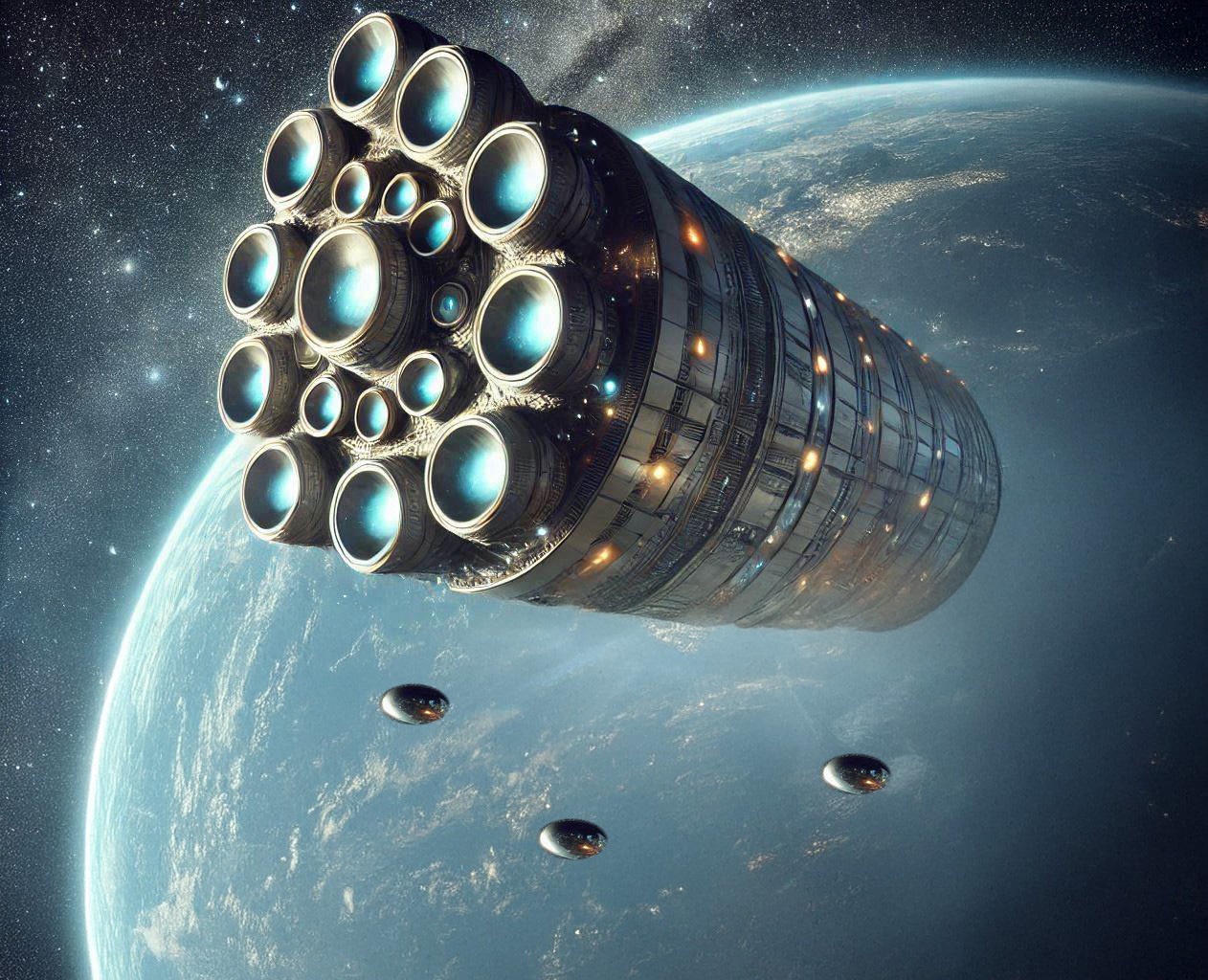
What next? Well, we can learn, play and explore. I, for one, intend to leave the solar system and explore other stars. There is reason to believe that technology will exist to reduce the travel time to the nearest star to 16 years earth time and a little less ship time. For a variety of reasons, it would be ill-advised to travel much faster. Faster than light travel (FTL) will probably always be impossible for physical beings. It may eventually be possible for purely spiritual beings. The transports that take us to the stars will be equipped with fully immersive VR, so the trip will not be tedious. If one is going to spend a great deal of time in VR, one may as well also be going somewhere. The same technology that keeps us young on earth will keep us young enroute.
Some may opt to make themselves more intelligent. I do not think it will be advisable to augment oneself with a lot of AI and I do not think it will be possible to “upload” and become substrate independent. Very likely, there will be devices that might be called “brain telescopes” that will make it possible for a person to temporarily enhance their thinking abilities by tapping into, albeit not joining with, artificial intelligence.
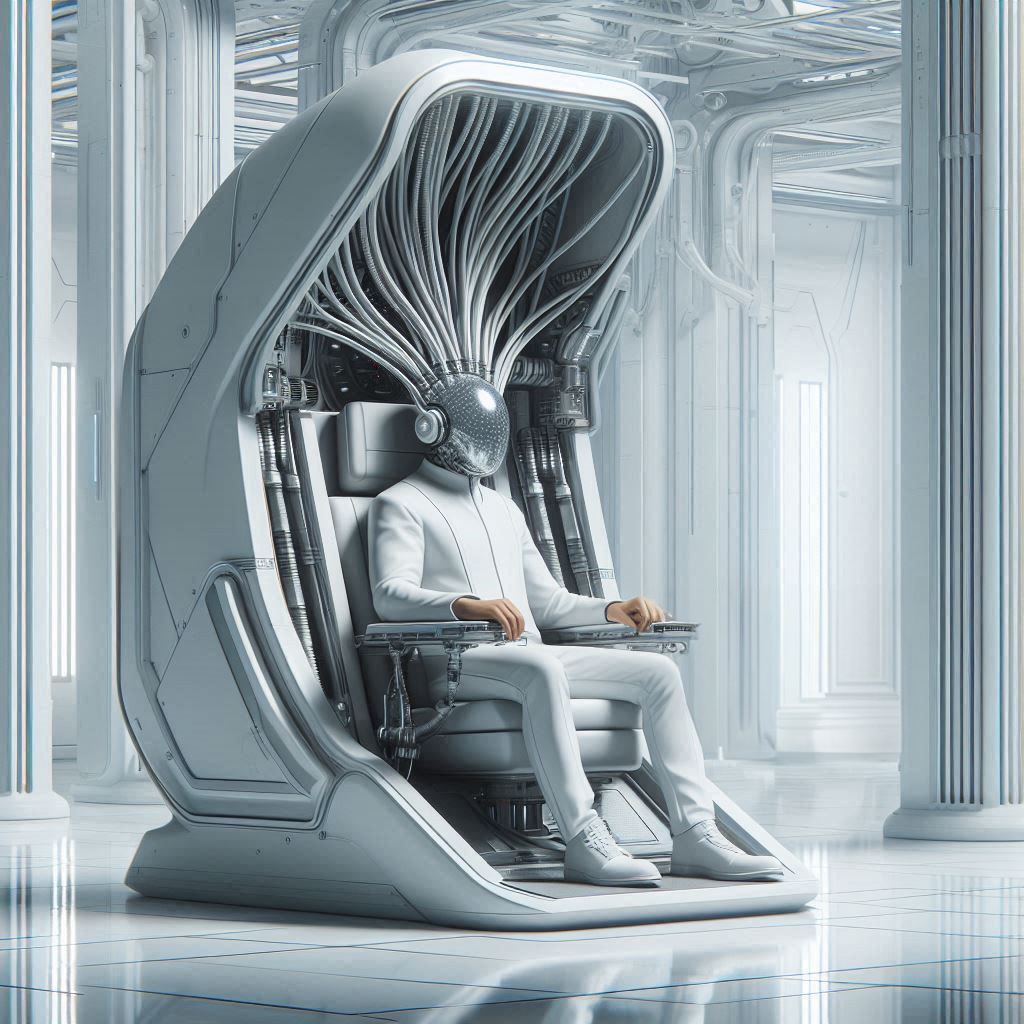
I have contemplated the idea that it may be possible, and reasonably natural, to expand one’s brain and have it maintained and transported in a vessel that is equipped with a means to manipulate the external environment. Possibly, this will be done with a system of dynamic force fields. People who opt for this upgrade will have full, rich lives. They just will not look at all like humans.
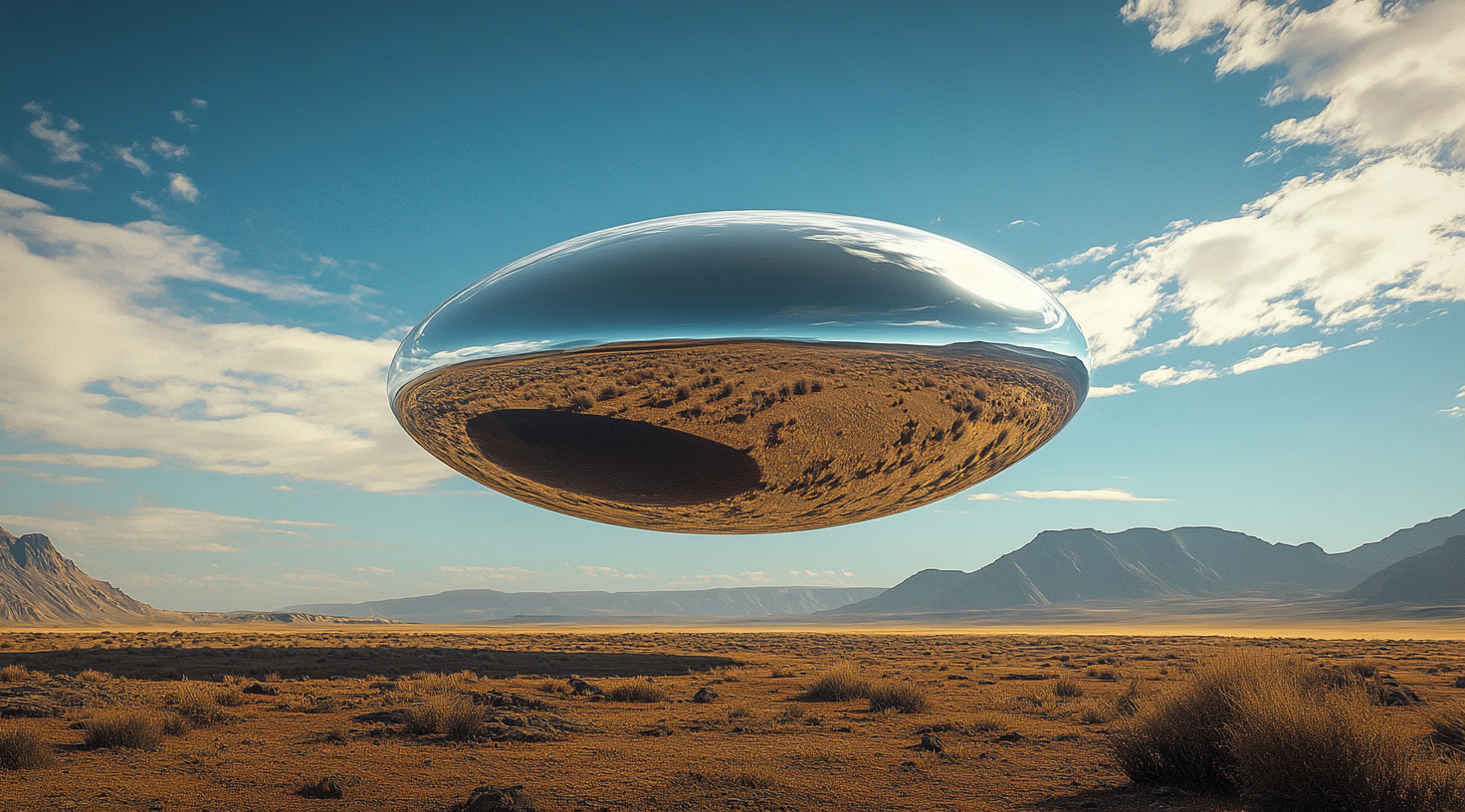
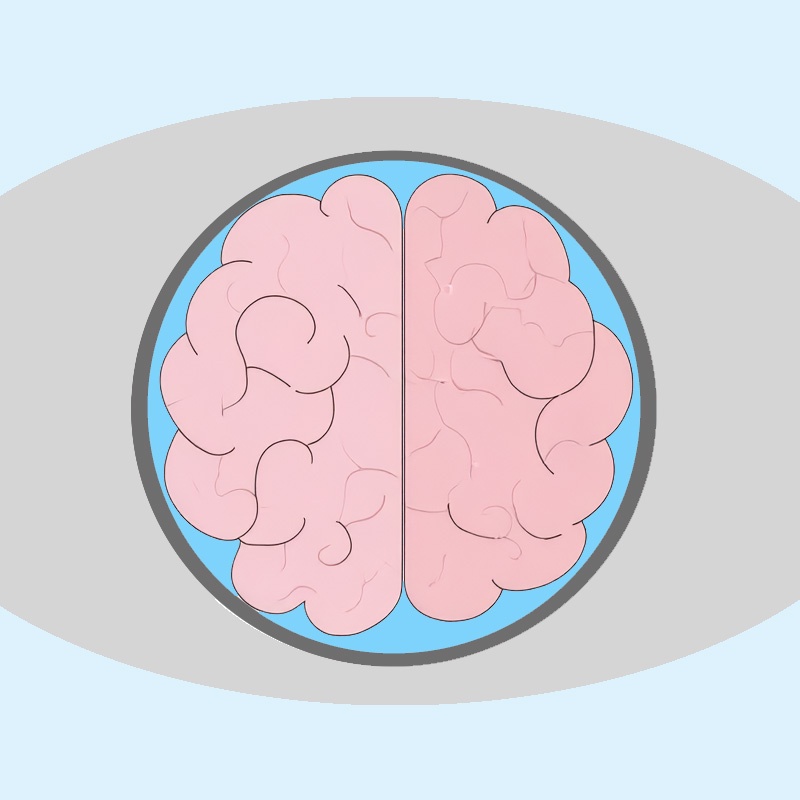
Any carnal pleasures they wish to indulge in will be facilitated by onboard VR systems.
I have argued elsewhere that humans may eventually expand their consciousnesses in ways that allow them to move beyond their physical bodies. That is a fanciful speculation that I discuss in detail here.
The biggest danger to future humans will be addiction to VR. It will be possible to indulge one’s most lavish and lascivious fantasies and have those fantasies enhanced with direct stimulation to our brain’s pleasure centers. For this reason, all “licensed” VR facilities will be equipped with safeguards that “extract” people from fantasies after a certain period of time. There will, of course, be unlicensed facilities where people can indulge and never be extracted. Those who opt to use these facilities will go the way of drug addicts throughout history. They will become vegetables, die out, and be forgotten…the same kind of evolutionary function that made animals aggressive.
There could be wars in the future, but I do not expect them. The United States is far more likely than any competitor to be the first post-Singularity society. American leaders—Elon Musk is a perfect example—do not seem interested in the sort of expansionism that leads to war. Men like Vladimir Putin are driven by past trauma that has made them pathologically aggressive. If men like him take over, we could be in trouble. That may happen if US leaders cave to the aforementioned luddism. I do not expect that. We will enter the Technological Singularity with Donald Trump, JD Vance and Elon Musk in charge. They are not the kind of Chamberlainesque leaders that are likely to get us into that sort of fix. If Kamala Harris had been elected president, I would be more concerned. And Joe Biden…well…frankly…I suspect he is under direct Chinese control. That is a discussion for another day. If he had been reelected, we would be sunk.
People of the future will be far too content to throw it all away with wars of aggression. They will not grow up with the kind of trauma that produced men like Adolph Hitler, Mao Zedong and Vladimir Putin.
However, there is another problem, arguably the elephant in the room, that must be addressed. What will happen to our youth? How will children grow up in a world where they will never be expected to hold a job, will be able to indulge in any fantasy whatsoever on a whim, and expect to remain alive and youthful indefinitely?
We will have to see how that goes. Perhaps we will happen upon ways to raise children in the post-Singularity universe that do not result in messed up adults. However, if it appears that things are going sideways, we may need to resort to draconian measures.
One idea that has occurred to me is that children could grow up in simulations where they do not have all the advantages of post-Singularity humans. They might be fooled, for the entirety of their youth, into thinking they live in a pre-Singularity society where people still fear death and are still expected to earn a living when they become adults. As they mature, they could slowly be made aware that the reality they inhabit is inauthentic. And do not think I have never considered that I may be living in such a simulated reality now. That possibility has occupied me for long stretches of time. For a variety of reasons, I do not take it seriously. If I am presently living in a simulation, there is probably no way to get past it. I may as well let the program run its course.
As for the deep future, I have suggested in other essays that our consciousnesses may expand beyond our brains and make it possible for us to build heaven. Possibly, that was the plan all along. There is a biblical passage that I have often interpreted in this context:
Another parable put he forth unto them, saying, The kingdom of heaven is like to a grain of mustard seed, which a man took, and sowed in his field: Which indeed is the least of all seeds: but when it is grown, it is the greatest among herbs, and becometh a tree, so that the birds of the air come and lodge in the branches thereof (Matthew 13:31-32).
Well, here we go. I have indulged in a practice that I frequently object to: suggesting that the Technological Singularity is something we will get through as if there were another side. There is no other side. That is not how exponential growth works. However, I suspect we may soon get to a point where we are not anxious about the future and are more willing to pause, take a look, and see where we want to go next. As for now, we are still animals that worry about growing old and dying and, short of that, not being invited to the best parties. When we are all, for a lack of a better phrase, partied out, we may see things more clearly.
 spikosauropod
Leave a comment